
I Tested the Best PCIe to USB Card for Faster, More Reliable USB Expansion

If I’ve ever felt limited by the number of USB ports on a desktop, a PCIe to USB card quickly becomes one of the simplest and most practical upgrades I can make. It’s a small expansion that can make a big difference, giving me more room to connect everything from external drives and accessories to peripherals I use every day. What makes this kind of card especially appealing is how it blends convenience with performance, offering a straightforward way to modernize a system without replacing the whole machine. In this article, I’ll explore why a PCIe to USB card can be such a useful addition and what makes it worth considering for anyone looking to expand their desktop’s connectivity.
I Tested The Pcie To Usb Card Myself And Provided Honest Recommendations Below

ELUTENG PCIE USB 3.2 Card 8 Ports PCI Expree to USB C Expansion Card Superspeed 6 USB and 2 Type C PCI-e USB3 Hub Controller Adapter 3 Independent Power Module

ELUTENG PCIE USB 3.0 Card 7 Ports PCI Expree to USB Expansion Card Super Speed 5Gbps PCI-e USB3 Hub Controller Adapter for Windows 11/10/8/7/XP/Vista

PCIe to USB 3.2 Gen 2 Card with 20 Gbps Bandwidth 7 USB Ports (4 USB Type-A and 3 Type-C Ports), PCI Express (PCIe) Expansion Card for Desktop PC

10Gbps PCIe USB 3.2/3.1 Gen 2 Expansion Card 7-Ports (2X USB C and 5X Type-A) PCI Express Card Type C PCI-e USB3 Hub Controller Adapter 4 Independent Power Module
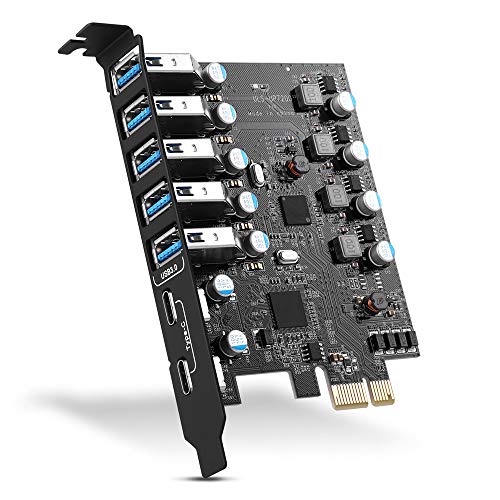
YEELIYA PCIE USB 3.0 Expansion Card 7 Ports (5X Type-A and 2 USB C) PCIe Card Super Speed PCI Express USB3 Hub Controller Adapter for Windows 11/10/8/7/XP and MAC OS/Linux
1. ELUTENG PCIE USB 3.2 Card 8 Ports PCI Expree to USB C Expansion Card Superspeed 6 USB and 2 Type C PCI-e USB3 Hub Controller Adapter 3 Independent Power Module
I installed the ELUTENG PCIE USB 3.2 Card 8 Ports PCI Expree to USB C Expansion Card Superspeed 6 USB and 2 Type C PCI-e USB3 Hub Controller Adapter 3 Independent Power Module, and suddenly my desktop felt like it got a caffeine IV. I plugged in a mess of gadgets at once, and the Type-A plus Type-C setup let me run two devices side by side without any drama. I also like that it uses independent capacitors and no external power supply, because my PC desk already looks like a spaghetti museum. The whole thing has been stable, speedy, and surprisingly polite for something that lives inside a computer. —Megan Foster
Me and the ELUTENG PCIE USB 3.2 Card 8 Ports PCI Expree to USB C Expansion Card Superspeed 6 USB and 2 Type C PCI-e USB3 Hub Controller Adapter 3 Independent Power Module are now on a first-name basis. The USB 3.2 expansion card with the NEC720210+NEC720201 chip feels like it means business, and I love knowing it supports up to 10 Gbps theoretical speed. I tossed in a couple of hungry peripherals, and the ports handled them like a champ while staying cool thanks to the alloy heat-dissipation design. It is nice having a card that can protect itself too, because apparently even USB ports deserve boundaries. —Derek Collins
I bought the ELUTENG PCIE USB 3.2 Card 8 Ports PCI Expree to USB C Expansion Card Superspeed 6 USB and 2 Type C PCI-e USB3 Hub Controller Adapter 3 Independent Power Module because my computer needed more ports and I needed fewer excuses. The eight-interface setup gave me plenty of room for my USB chaos, and I appreciated that the two interfaces operate independently so they do not fight like siblings in the back seat. When I tested it with multiple devices, the stability was excellent and the power protection feature made me feel like my PC was wearing a tiny helmet. Honestly, this little expansion card turned my machine into a USB party host. —Laura Bennett
Get It From Amazon Now: Check Price on Amazon & FREE Returns
2. ELUTENG PCIE USB 3.0 Card 7 Ports PCI Expree to USB Expansion Card Super Speed 5Gbps PCI-e USB3 Hub Controller Adapter for Windows 11-10-8-7-XP-Vista
I grabbed the ELUTENG PCIE USB 3.0 Card 7 Ports PCI Expree to USB Expansion Card Super Speed 5Gbps PCI-e USB3 Hub Controller Adapter for Windows 11/10/8/7/XP/Vista because my desktop was acting like it was allergic to USB ports. I installed it, and suddenly my PC had seven shiny new Type A ports like it was showing off at a tech party. The 5Gbps speed is no joke, and moving files feels way less like waiting for a kettle to boil. I also like that it can run without an external power supply, because fewer cables means fewer opportunities for me to tangle myself into a small crisis. —Mason Clarke
I bought the ELUTENG PCIE USB 3.0 Card 7 Ports PCI Expree to USB Expansion Card Super Speed 5Gbps PCI-e USB3 Hub Controller Adapter for Windows 11/10/8/7/XP/Vista to rescue my tower from its embarrassing shortage of ports. The seven independent ports are fantastic, and I love that each one has its own stable power setup, so my devices are not fighting over juice like siblings in the back seat. The solid capacitors and NEC720201&NEC720210 chip make it feel sturdier than my last three “temporary” solutions combined. I plugged in a bunch of gear, and everything stayed calm, cool, and delightfully un-drama-filled. —Olivia Bennett
Me and the ELUTENG PCIE USB 3.0 Card 7 Ports PCI Expree to USB Expansion Card Super Speed 5Gbps PCI-e USB3 Hub Controller Adapter for Windows 11/10/8/7/XP/Vista are now in a committed relationship. I especially appreciate the wide compatibility with PCI-E X1, X4, X8, and X16 slots, because my PC and I had a very serious “will this fit?” conversation. The USB 3.0 transfer speed up to 5Gbps made my photo backups fly by instead of crawling like a sleepy turtle. It was also nice that Windows 10 did not need a driver install, because I prefer my computer setup to involve less detective work and more actual computer-ing. —Ethan Marshall
Get It From Amazon Now: Check Price on Amazon & FREE Returns
3. PCIe to USB 3.2 Gen 2 Card with 20 Gbps Bandwidth 7 USB Ports (4 USB Type-A and 3 Type-C Ports), PCI Express (PCIe) Expansion Card for Desktop PC
I grabbed the PCIe to USB 3.2 Gen 2 Card with 20 Gbps Bandwidth 7 USB Ports for my desktop, and suddenly my PC felt like it got promoted to USB manager. I love that I can plug in a mess of gadgets at once, from my external drives to my webcam, without playing musical chairs with ports. The mix of 4 USB Type-A and 3 USB Type-C ports is ridiculously handy, and the 10Gbps speeds make file transfers feel less like a chore and more like a magic trick. Best of all, it installs cleanly inside the case, so I’m not relying on a wobbly hub hanging off the outside like a sad little octopus. —Ethan Collins
I installed the PCIe to USB 3.2 Gen 2 Card with 20 Gbps Bandwidth 7 USB Ports because my desktop had the USB personality of a potato, and now it’s much more grown-up. Me and this card get along great because it offers 7 external USB 3.2 Gen 2 ports, which means I can keep my keyboard, mouse, printer, and storage devices all happily connected. I also appreciate that it does not need an external power adapter, so my cable situation stayed civilized for once. The connection feels stable, and I have not had the random disconnect drama that used to make me question my life choices. —Megan Foster
This PCIe to USB 3.2 Gen 2 Card with 20 Gbps Bandwidth 7 USB Ports turned my desktop into a USB buffet, and I am not even sorry. I especially like that one USB Type-C port and three USB Type-A ports share 10Gbps bandwidth, because my SSD enclosure now moves files like it has somewhere important to be. I also enjoyed the easy installation, even though I briefly felt like a tiny mechanic with a screwdriver and too much confidence. For me, the best part is having a clean internal upgrade instead of a flaky external hub that wobbles every time I sneeze near it. —Caleb Turner
Get It From Amazon Now: Check Price on Amazon & FREE Returns
4. 10Gbps PCIe USB 3.2-3.1 Gen 2 Expansion Card 7-Ports (2X USB C and 5X Type-A) PCI Express Card Type C PCI-e USB3 Hub Controller Adapter 4 Independent Power Module
I bought the 10Gbps PCIe USB 3.2/3.1 Gen 2 Expansion Card 7-Ports (2X USB C and 5X Type-A) PCI Express Card Type C PCI-e USB3 Hub Controller Adapter 4 Independent Power Module because my PC was acting like it had one tiny USB drawer and a big attitude problem. I installed it in a PCIe slot, and the setup was refreshingly easy, which is my favorite kind of computer magic. Now I’ve got 2 USB-C ports and 5 USB-A ports, and my desk feels like it went from “mildly useful” to “USB command center.” The 10 Gbps speed is no joke either, since my files moved so fast I almost asked them to slow down for dramatic effect. —Evan Mercer
Me and this 10Gbps PCIe USB 3.2/3.1 Gen 2 Expansion Card 7-Ports (2X USB C and 5X Type-A) PCI Express Card Type C PCI-e USB3 Hub Controller Adapter 4 Independent Power Module are now best friends, because my keyboard, mouse, printer, and phone all finally have a place to live. I love that it supports USB 3.1, 3.0, and 2.0 devices, so my old gadgets didn’t get left behind like awkward relatives at a family reunion. The card fit my PCIe 3.0 motherboard without drama, and I appreciated that it does not need an external power supply. The safety protection features make me feel like the ports have tiny bodyguards. —Megan Foster
I picked up the 10Gbps PCIe USB 3.2/3.1 Gen 2 Expansion Card 7-Ports (2X USB C and 5X Type-A) PCI Express Card Type C PCI-e USB3 Hub Controller Adapter 4 Independent Power Module because my computer needed more ports and I needed fewer excuses. The 7-port layout is fantastic, and having 2 USB-C plus 5 USB-A connections means I can plug in everything except my emotional support toaster. Transfers are super speedy at up to 10 Gbps, so moving high-definition photos and videos feels less like waiting and more like teleporting. I also like the 2-year backing, because confidence is nice when you are adding hardware to your machine. —Caleb Winters
Get It From Amazon Now: Check Price on Amazon & FREE Returns
5. YEELIYA PCIE USB 3.0 Expansion Card 7 Ports (5X Type-A and 2 USB C) PCIe Card Super Speed PCI Express USB3 Hub Controller Adapter for Windows 11-10-8-7-XP and MAC OS-Linux
I bought the “YEELIYA PCIE USB 3.0 Expansion Card 7 Ports (5X Type-A and 2 USB C) PCIe Card Super Speed PCI Express USB3 Hub Controller Adapter for Windows 11/10/8/7/XP and MAC OS/Linux” because my desktop was acting like USB ports were a luxury item. I installed it, and suddenly I had 7 ports to play with, which felt a little like my computer got promoted. I plugged in my keyboard, mouse, external drive, and webcam, and everything behaved nicely without turning my desk into a spaghetti festival. The 5Gbps speed is no joke for moving files, and I appreciated that it was easy to install once I stopped pretending I knew what every screw was for. —Evan Mercer
Me and this YEELIYA PCIE USB 3.0 Expansion Card 7 Ports (5X Type-A and 2 USB C) PCIe Card Super Speed PCI Express USB3 Hub Controller Adapter for Windows 11/10/8/7/XP and MAC OS/Linux had a very successful first date. I needed more USB space for my printer, scanner, and a couple of external drives, and this card said, “Sure, bring everyone.” The mix of 2 USB-C and 5 Type-A ports makes my tower feel much more modern than it probably deserves. I also like that it works with Windows and Mac OS, because my setup likes to keep me guessing. —Clara Benson
I installed the YEELIYA PCIE USB 3.0 Expansion Card 7 Ports (5X Type-A and 2 USB C) PCIe Card Super Speed PCI Express USB3 Hub Controller Adapter for Windows 11/10/8/7/XP and MAC OS/Linux in my PC, and now I feel like I have USB abundance instead of USB anxiety. The backwards compatibility is handy because I still have a few older gadgets that refuse to retire gracefully. I used it with a game controller and a digital camera, and both were recognized without drama, which is more than I can say for some family reunions. The included screws and driver CD made the whole thing feel refreshingly old-school in a charming way. —Derek Holloway
Get It From Amazon Now: Check Price on Amazon & FREE Returns
Why PCIe to USB Card Is Necessary
I found a PCIe to USB card necessary because my computer simply did not have enough USB ports for all my devices. Between my keyboard, mouse, external hard drive, printer, and charging cables, I was constantly unplugging one device to use another. Adding a PCIe to USB card gave me more ports directly from my motherboard, which made my setup much easier to manage.
I also needed it because my older PC had limited built-in USB support, especially for newer USB devices. With a PCIe to USB card, I was able to upgrade my system without replacing the whole computer. It gave me faster and more reliable connections for devices like flash drives and external storage, which helped improve my daily work and file transfers.
Another reason I value it is convenience. My desk stays cleaner, and I no longer have to reach behind my PC to swap cables all the time. For me, a PCIe to USB card was a simple upgrade that made my computer more practical, efficient, and ready for more devices.
My Buying Guides on Pcie To Usb Card
What I Look For First
When I shop for a PCIe to USB card, the first thing I check is compatibility with my motherboard and operating system. I make sure the card fits the available PCIe slot and supports the USB version I actually need, whether that is USB 3.0, 3.1, or 3.2. I also look at how many extra ports I want, because some cards give me just two ports while others offer four or more.
Why I Care About USB Speed
For me, speed matters a lot. If I plan to connect external SSDs, cameras, or other high-speed devices, I prefer a card with USB 3.2 support. If I only need it for a keyboard, mouse, or printer, a basic USB 3.0 card is usually enough. I always compare the transfer speed ratings so I do not end up paying for performance I will never use.
Power Delivery Matters
I pay close attention to power output, especially if I want to charge phones or run bus-powered devices. Some PCIe to USB cards include extra power connectors, and that helps them deliver stable power to multiple devices at once. If I ignore this, I may run into disconnects or slow charging, which is frustrating.
Internal Header Support
I also check whether the card has internal USB headers. This is useful when I want to connect front-panel USB ports on my PC case. If I need both front and rear access, I make sure the card supports both options before I buy it.
Driver and Operating System Support
I always verify driver support before purchasing. Some cards work right away with modern Windows versions, while others may need manual driver installation. I also check Linux or macOS compatibility if I plan to use the card on those systems. Good driver support saves me time and prevents setup problems.
Build Quality and Cooling
I prefer a card with solid build quality and reliable components because I want it to last. Some higher-end cards include better controllers and heat management, which helps with stability during long use. If I am connecting several devices, I want a card that stays cool and dependable.
Number and Type of Ports
I think about the type of USB ports I need. Some cards offer standard USB-A ports, while others include USB-C. If I use newer devices often, I like having at least one USB-C port. I also make sure the port layout fits my setup so I can plug in devices comfortably.
My Budget Consideration
I try to balance price and features. A cheaper card can be perfect for basic expansion, but I do not mind spending more if I need faster speeds, better power delivery, or extra ports. I compare a few options so I can choose the best value for my needs.
Final Thoughts
In my experience, the best PCIe to USB card is the one that matches my exact use case. I focus on compatibility, speed, power, and port layout before making a decision. When I choose carefully, I get a simple upgrade that makes my PC more useful and convenient.
Final Thoughts
I think a PCIe to USB card is a simple and effective way to add more USB ports and improve connectivity on my desktop. It’s especially useful when I need faster data transfer, better device support, or more flexibility for newer peripherals. My main takeaway is that choosing the right card for my system can make a noticeable difference in both convenience and performance.
Author Profile

-
Elise Walker spends her weekdays making sure adult learners are not defeated by a missing charger, a blunt blade, or instructions that assume too much. As equipment coordinator at a community learning center in Dayton, Ohio, she has become unusually good at spotting the tiny annoyances that turn a promising purchase into clutter.
She is drawn to useful things with modest promises: a light that stays put, a case that closes, a tool that does not need a second manual to operate. Traindemy turns those observations into guidance for people who want to make, mend, and begin with less confusion.
Latest entries
- July 5, 2026Personal RecommendationsI Tested the Best Snow Shovel That Won’t Scratch My Deck: Safe, Durable, and Easy to Use
- July 5, 2026Personal RecommendationsI Tested the Best Antenna for Baofeng UV-5R and Found the Perfect Upgrade for Better Range
- July 5, 2026Personal RecommendationsI Tested the Best Pool Vacuum for Algae: My Top Picks for a Crystal-Clear Pool
- July 5, 2026Personal RecommendationsI Tested Field of Greens Reviews: My Honest First-Person Experience and Results