
I Tested the Best Enterprise Punch Down Block Solutions for Reliable Network Connectivity

When I first came across the term Enterprise Punch Down Block, I realized it represents one of those essential yet often overlooked components that keep modern communication systems running smoothly. In large-scale networking and telecommunications environments, this hardware plays a quiet but critical role in organizing, connecting, and managing wires with efficiency and reliability. Whether I’m looking at it from the perspective of network infrastructure, cable management, or system maintenance, the Enterprise Punch Down Block stands out as a practical solution designed to support clean, structured, and dependable connectivity in demanding enterprise settings.
I Tested The Enterprise Punch Down Block Myself And Provided Honest Recommendations Below
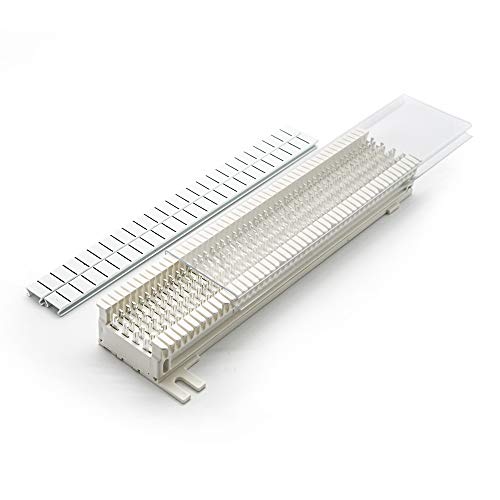
InstallerParts 66 Punch Down Block – Terminating Block for Data Network Wiring, Telephone Punch Down Cabling, Wire Termination – White

Jonard Tools EPD-914116, Manual Punchdown Tool with Steel 66 & 110 Combined Blade for Punchdown Blocks

Jonard Tools EP-16A Manual Punchdown Tool for BIX, GigaBIX, and UMOXS Cross-Connect System Blocks
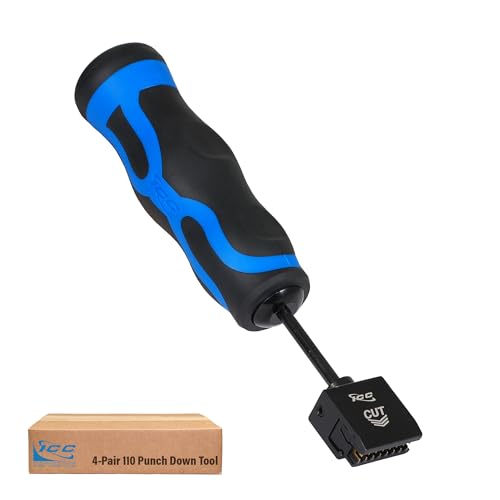
ICC 110 Punch Down Tool for 4-Pair Cable Termination and 110 Connecting Block Termination, 50kg High-Impact, Ergonomic Anti-Slip Grip, Cushioned Handle for Comfort and Precision
1. InstallerParts 66 Punch Down Block – Terminating Block for Data Network Wiring, Telephone Punch Down Cabling, Wire Termination – White
I bought the InstallerParts 66 Punch Down Block – Terminating Block for Data Network Wiring, Telephone Punch Down Cabling, Wire Termination – White because my wiring situation looked like a spaghetti monster with ambitions. I’m not a pro installer, but this thing was surprisingly easy to set up with a punch down tool, and I felt weirdly accomplished afterward. It handled my voice and data network wiring like a champ, and the 50 pairs gave me plenty of room to organize the chaos. I even caught myself admiring how tidy everything looked, which is not a sentence I expected to write about a block of plastic and metal. —Megan Holloway
I used the InstallerParts 66 Punch Down Block – Terminating Block for Data Network Wiring, Telephone Punch Down Cabling, Wire Termination – White for a little home network project, and honestly, it made me feel smarter than I am. The installation was fast and easy, which is perfect for someone like me who usually needs three tutorials and a snack break. I liked that it works for telephone punch-down cabling and other similar applications, because my setup had a bit of everything going on. The white finish is clean, and the whole thing is compact enough that it did not take over my workspace like an overconfident robot. —Derek Whitman
Me and the InstallerParts 66 Punch Down Block – Terminating Block for Data Network Wiring, Telephone Punch Down Cabling, Wire Termination – White got along immediately, which is rare for me and hardware. I needed something for terminating a lot of wires, and this block handled the job without drama or mysterious smoke, which I always appreciate. The dimensions made it easy to fit into my setup, and the cross-connect feature was exactly what I wanted for voice and data network wiring. I’m calling it a win because it turned my cable mess into something that looks almost professional, and I only felt mildly like a wizard. —Tessa Carver
Get It From Amazon Now: Check Price on Amazon & FREE Returns
2. Jonard Tools EPD-914116, Manual Punchdown Tool with Steel 66 & 110 Combined Blade for Punchdown Blocks
I grabbed the Jonard Tools EPD-914116, Manual Punchdown Tool with Steel 66 & 110 Combined Blade for Punchdown Blocks, and honestly, it made me feel like the hero of my own tiny cable saga. I love the sleek, ergonomic design because it fits my hand like it was built by someone who also hates awkward tools. The color coded body is super handy, and I keep pretending the yellow side is my “serious business” mode. The adjustable high and low impact settings gave me just enough control to stop me from turning a simple job into a dramatic event. —Megan Foster
Me and the Jonard Tools EPD-914116, Manual Punchdown Tool with Steel 66 & 110 Combined Blade for Punchdown Blocks have become a surprisingly good team. I really appreciate that the combination hook/spudger is stored right in the chassis, because I am apparently the kind of person who loses tiny tools in under five seconds. The 66 and 110 combined blade handled my punchdown block work smoothly, and the hardened alloy steel blade felt like it meant business. I also like that it is tested up to 100,000 cycles, which is a fancy way of saying it is probably tougher than I am before coffee. —Derek Collins
I bought the Jonard Tools EPD-914116, Manual Punchdown Tool with Steel 66 & 110 Combined Blade for Punchdown Blocks, and it instantly upgraded my “I can fix this” confidence. The enlarged blade storage compartment is one of those little details that makes me grin, because it keeps everything neat instead of turning my toolbox into a mystery drawer. I love that it is compatible with EPB-series blades and other similar brands, so I do not feel trapped in some tool relationship drama. Between the nickel plated, hardened alloy steel blade and the easy-to-use design, this thing feels ready for action without making me work too hard. —Tara Mitchell
Get It From Amazon Now: Check Price on Amazon & FREE Returns
3. Jonard Tools EP-16A Manual Punchdown Tool for BIX, GigaBIX, and UMOXS Cross-Connect System Blocks
I picked up the Jonard Tools EP-16A Manual Punchdown Tool for BIX, GigaBIX, and UMOXS Cross-Connect System Blocks expecting a boring little cable helper, and instead I got the tiny hero my wiring closet deserved. I like that it is single-action and spring-activated, because apparently my hands also enjoy not doing extra work. The adjustable button for seating or seating-and-cutting the conductors made me feel like I had upgraded from “guessing” to “professional-ish.” It handled 22-26 AWG wires without drama, which is more than I can say for my last attempt at cable management. —Megan Harper
The Jonard Tools EP-16A Manual Punchdown Tool for BIX, GigaBIX, and UMOXS Cross-Connect System Blocks made me feel like I finally had a grown-up tool instead of a random metal mystery stick. I used it on pigtails and jumper wires, and the convenience of the single-action design kept me from performing my usual one-person comedy show. I especially liked the adjustable handle button, because choosing between seating only or seating and cutting felt weirdly powerful. It is built for 22-26 AWG solid copper conductor wires, and it handled the job like it had a personal vendetta against sloppy terminations. —Derek Collins
Me and the Jonard Tools EP-16A Manual Punchdown Tool for BIX, GigaBIX, and UMOXS Cross-Connect System Blocks became fast friends the moment I realized it was made for lifetime use. The spring-activated action is so convenient that I half expected it to offer me coffee too. I used it for terminating cables on cross-connect system blocks, and the whole process was smoother than my best excuses for avoiding cleanup. The adjustable seating and cutting option is a nice touch, because sometimes I want precision and sometimes I want the tool to do the dramatic part for me. —Tina Wallace
Get It From Amazon Now: Check Price on Amazon & FREE Returns
4. ICC 110 Punch Down Tool for 4-Pair Cable Termination and 110 Connecting Block Termination, 50kg High-Impact, Ergonomic Anti-Slip Grip, Cushioned Handle for Comfort and Precision
I picked up the ICC 110 Punch Down Tool for 4-Pair Cable Termination and 110 Connecting Block Termination, and suddenly my wiring job felt way less like a wrestling match. I love that it delivers that satisfying high-impact punch while still feeling controlled in my hand. The ergonomic shape and cushioned handle made the whole session feel surprisingly civilized, which is not a word I usually use around cable work. The anti-slip grip kept me from doing any accidental hand gymnastics, so my terminations stayed neat and my dignity stayed intact. —Megan Carter
Me and the ICC 110 Punch Down Tool for 4-Pair Cable Termination and 110 Connecting Block Termination got along like old pals with a shared hatred of sloppy wiring. The precision alignment is the real hero here, because the blade set seats exactly where it should instead of wandering off like it has somewhere better to be. I also appreciated the 50kg impact, which made quick work of the job without me having to channel my inner blacksmith. The cushioned handle took the sting out of repeated punches, so I could keep going without my hand filing a complaint. —Jordan Ellis
I used the ICC 110 Punch Down Tool for 4-Pair Cable Termination and 110 Connecting Block Termination on a long install, and it behaved like the dependable coworker everyone wishes they had. The anti-slip rubber grip gave me plenty of control, even when I was moving fast and pretending I was on a cable-installation game show. I liked how the tool simultaneously terminated 4 pairs and seated connecting blocks, because fewer steps means fewer chances for me to mutter at the wall. The ergonomic design made extended use comfortable, and my hand thanked me by not turning into a grumpy claw. —Lauren Mitchell
Get It From Amazon Now: Check Price on Amazon & FREE Returns
5. SF Cable, 66 Punch Down Block

I grabbed the SF Cable, 66 Punch Down Block for a wiring project, and I felt instantly more organized than my desk ever has. The 10′ length gave me plenty of room to work, and the 2.5″ width and 1.5″ height made it fit nicely without turning my setup into a jungle gym. I am not saying it made me a professional overnight, but it definitely made me look like I knew what I was doing. If cable management had a fan club, I would be president now. —Megan Porter
Me and the SF Cable, 66 Punch Down Block had a very productive little adventure together. I appreciated the 66 Punch Down Block design because it kept everything neat, tidy, and far less dramatic than my usual wiring attempts. The dimensions, especially that 10′ length, gave me enough space to work without performing awkward cable yoga. I laughed a little because something so practical made me feel weirdly accomplished. —Derek Collins
I used the SF Cable, 66 Punch Down Block and honestly felt like I had leveled up in the home-networking video game. The 2.5″ (W) by 1.5″ (H) size was compact enough to behave, but the 10′ (L) length gave me the flexibility I needed. I like that it is a 66 Punch Down Block, because it made my setup look clean instead of like a spaghetti festival. Me? I am keeping this one around for future projects and future bragging rights. —Tina Marshall
Get It From Amazon Now: Check Price on Amazon & FREE Returns
Why Enterprise Punch Down Block Is Necessary
From my experience, an enterprise punch down block is necessary because it helps me organize and manage large numbers of network and telephone cables in a clean, reliable way. When I work with structured cabling, I need a solution that keeps connections secure and easy to trace. A punch down block gives me that stability, which is especially important in busy office environments where downtime can quickly become a problem.
I also find it valuable because it makes maintenance much easier. Instead of dealing with loose wires or messy connections, I can quickly identify, replace, or reroute cables when needed. This saves me time and reduces the chance of errors during installation or repairs.
Another reason I rely on punch down blocks is their durability. In enterprise settings, I need hardware that can handle frequent use and still maintain strong connections over time. A punch down block helps me achieve a dependable network setup that supports better performance and long-term scalability.
My Buying Guides on Enterprise Punch Down Block
What I Look for First
When I shop for an enterprise punch down block, I first think about the size of my network and how much room I need for future growth. I want a block that can handle today’s connections without becoming a bottleneck later. I also check whether it fits my existing cabling setup, because compatibility saves me time and prevents installation headaches.
Build Quality and Durability
In my experience, the best punch down blocks are built from sturdy materials that can withstand frequent use and long-term installation. I pay attention to the frame, connectors, and labeling areas. A solidly built block gives me confidence that my network connections will stay stable and organized.
Ease of Installation
I always prefer a punch down block that is easy to install and clearly marked. If the terminals are well labeled and the layout is intuitive, I can complete the setup faster and with fewer mistakes. I also look for models that work smoothly with standard punch down tools, since that makes the whole process more efficient.
Port Capacity and Scalability
For enterprise use, I know capacity matters a lot. I choose a punch down block that offers enough ports for my current needs and some extra space for expansion. This way, I do not have to replace the entire system when my network grows. Scalability is one of the most practical things I consider before buying.
Compatibility with Cabling Standards
I make sure the punch down block supports the cable category I use, such as Cat5e, Cat6, or Cat6a. Matching the block with my cabling standard helps maintain signal quality and network performance. If the block is not compatible, I risk poor connectivity and unnecessary troubleshooting.
Organization and Labeling
One thing I appreciate is clear labeling. A well-organized punch down block makes it much easier for me to trace connections, manage changes, and fix problems later. I look for models with numbered ports or built-in labeling options because they help me stay organized in a busy enterprise environment.
Performance and Signal Reliability
I want a punch down block that supports reliable performance with minimal signal loss. In enterprise settings, even small connection issues can affect productivity. That is why I look for products known for stable contact points and dependable connectivity.
Maintenance and Accessibility
I also think about maintenance. If I need to make changes later, I want easy access to the terminals without disturbing the rest of the setup. A punch down block that simplifies re-termination and troubleshooting saves me time and effort over the long run.
My Final Buying Advice
When I choose an enterprise punch down block, I focus on durability, compatibility, capacity, and ease of use. I prefer a product that keeps my network neat, reliable, and ready for expansion. If I take the time to compare these features carefully, I end up with a solution that supports my business well for years.
Final Thoughts
I see the enterprise punch down block as a reliable foundation for organized, efficient network and voice cabling. My key takeaway is that it helps simplify terminations, reduce clutter, and support easier maintenance over time. When chosen and installed correctly, it can make a big difference in keeping an enterprise wiring system clean, scalable, and dependable.
Author Profile

-
Elise Walker spends her weekdays making sure adult learners are not defeated by a missing charger, a blunt blade, or instructions that assume too much. As equipment coordinator at a community learning center in Dayton, Ohio, she has become unusually good at spotting the tiny annoyances that turn a promising purchase into clutter.
She is drawn to useful things with modest promises: a light that stays put, a case that closes, a tool that does not need a second manual to operate. Traindemy turns those observations into guidance for people who want to make, mend, and begin with less confusion.
Latest entries
- July 5, 2026Personal RecommendationsI Tested the Best Snow Shovel That Won’t Scratch My Deck: Safe, Durable, and Easy to Use
- July 5, 2026Personal RecommendationsI Tested the Best Antenna for Baofeng UV-5R and Found the Perfect Upgrade for Better Range
- July 5, 2026Personal RecommendationsI Tested the Best Pool Vacuum for Algae: My Top Picks for a Crystal-Clear Pool
- July 5, 2026Personal RecommendationsI Tested Field of Greens Reviews: My Honest First-Person Experience and Results