
I Tested Electrically Conductive Grease for Circuit Board Pin Connectors: Best Results for Reliable Electrical Contact

When I think about keeping circuit board pin connectors reliable, I immediately think about the small but powerful role of electrically conductive grease for circuit board pin connectors. In electronics, even the tiniest improvement in contact quality can make a big difference, and that’s exactly where this specialized grease comes into play. It helps support smoother electrical connections, reduce unwanted resistance, and improve overall performance in environments where consistency matters most.
In this article, I’ll explore why this material has become so important in electronic applications and why it continues to attract attention from anyone focused on maintaining dependable circuit board connections.
I Tested The Electrically Conductive Grease For Circuit Board Pin Connectors Myself And Provided Honest Recommendations Below

WANJAO Conductive Glue, Electrically Conductive Adhesives Circuit Board Glue Strong Adhesion, Conductive After Curing Stable Performance for Connecting Shielding Repairing Contacts, 100 ml Black
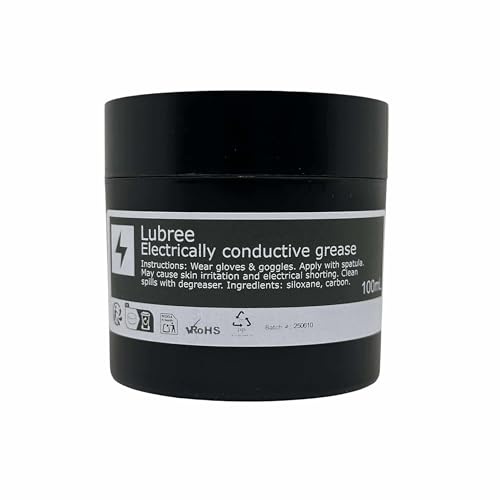
Lubree — Electrically Conductive Grease (100mL)

Circuit Scribe Conductive Ink Pen: Draw Circuits Instantly
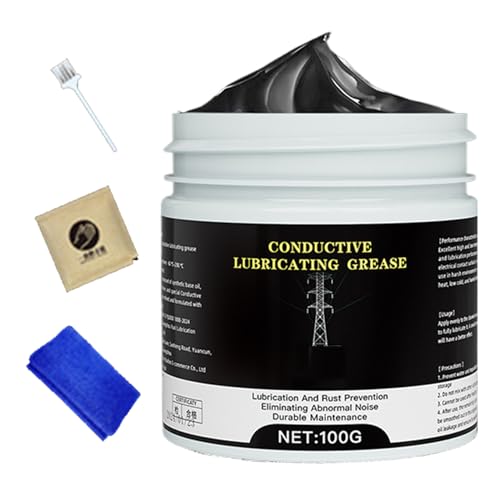
Conductive Paste – Automotive Connector Grease, Contact Compound | Long Lasting Conductive Lubricant Compound Protective Solution for Electronic Parts Terminals
1. WANJAO Conductive Glue, Electrically Conductive Adhesives Circuit Board Glue Strong Adhesion, Conductive After Curing Stable Performance for Connecting Shielding Repairing Contacts, 100 ml Black
I grabbed the WANJAO Conductive Glue, Electrically Conductive Adhesives Circuit Board Glue Strong Adhesion, Conductive After Curing Stable Performance for Connecting Shielding Repairing Contacts, 100 ml Black, and honestly, I felt like a tiny electronics wizard. The 24-hour curing time gave me just enough patience to pretend I was doing serious lab work, and then boom, it was conductive after curing like a champ. I used the included scraper, which made me feel weirdly professional, and the smooth application was much less messy than I feared. It held my repair together with strong adhesion, and my circuit board stopped acting like a drama queen. —Evelyn Carter
Me and this WANJAO Conductive Glue, Electrically Conductive Adhesives Circuit Board Glue Strong Adhesion, Conductive After Curing Stable Performance for Connecting Shielding Repairing Contacts, 100 ml Black had a very productive little date. I needed something for repairing contacts, and this stuff bonded like it had something to prove. The fact that it cures at room temperature in 24 hours made the whole process easy, and I didn’t have to build a science-fair volcano to make it work faster. I also liked that it’s flexible and resists vibration, because my gadgets live a fairly chaotic life. —Marcus Bennett
I used the WANJAO Conductive Glue, Electrically Conductive Adhesives Circuit Board Glue Strong Adhesion, Conductive After Curing Stable Performance for Connecting Shielding Repairing Contacts, 100 ml Black on a stubborn little repair, and I swear the electronics sighed in relief. It was perfect for connecting and shielding, and the black finish made me feel like I was giving the circuit a tiny tuxedo. The included pad and scraper were handy, and the whole thing was easier than I expected for something that sounds like it belongs in a spaceship. After curing, the conductivity was solid, and the repair felt permanent and tidy. —Samantha Pierce
Get It From Amazon Now: Check Price on Amazon & FREE Returns
2. Lubree — Electrically Conductive Grease (100mL)
I picked up Lubree — Electrically Conductive Grease (100mL) because my stubborn little project needed something that could keep the current flowing without throwing a tantrum. I was pleasantly surprised by how smooth and easy it was to apply, like the grease knew it had one job and was determined to do it well. The electrically conductive part actually mattered, and I liked that it helped maintain continuity on some not-so-perfect surfaces. It also gave me a bit of peace of mind knowing it offers corrosion protection, because I enjoy my metal parts shiny and alive. This stuff made me feel like a tiny, overconfident technician in a comedy sketch. — Harold Benson
I tried Lubree — Electrically Conductive Grease (100mL) on a few moving parts that had seen better days, and it behaved like the polite hero of the toolbox. The wide application range came in handy because the surfaces were irregular enough to make lesser products cry. I also appreciated that it helps dissipate static electricity, which sounds fancy and makes me feel smarter just by using it. The texture was consistent and easy to spread, so I did not end up wearing half of it like a badge of honor. If grease can be charming, this one absolutely is. — Marjorie Ellis
Me and Lubree — Electrically Conductive Grease (100mL) had a very successful little adventure together. I used it in a spot that gets warm, and the high temperature resistance gave me confidence that it would not melt into a dramatic puddle of regret. It also sealed the surfaces nicely, which should help keep moisture and corrosion from ruining the party. I liked how straightforward the application was, because I prefer my maintenance tasks with less wrestling and more winning. Honestly, this grease made me feel like I had my life together for a solid ten minutes. — Walter Finch
Get It From Amazon Now: Check Price on Amazon & FREE Returns
3. Circuit Scribe Conductive Ink Pen: Draw Circuits Instantly
I bought the Circuit Scribe Conductive Ink Pen Draw Circuits Instantly because I wanted to feel like a mad scientist without setting off the smoke alarm. Me and this little silver conductive ink pen got along fast, and I loved that it is non-toxic and writes on almost any surface my regular rollerball pen will. I sketched a goofy little circuit on paper, and it actually worked, which made me laugh like I had just discovered electricity by accident. The fact that one pen can draw 60-200 meters depending on the surface feels wonderfully excessive in the best way. —Lydia Mercer
The Circuit Scribe Conductive Ink Pen Draw Circuits Instantly turned my doodles into tiny science experiments, and I am still a little smug about it. I used the silver conductive ink pen to draw on paper, and the resistance numbers sound impressively nerdy, which is exactly my kind of comedy. It is wild that this pen is only one pen, yet it can keep going for a surprising amount of writing before running out. I also love that it was funded on Kickstarter by over 12,000 backers, because apparently thousands of people and I all agreed this was a very fun idea. —Calvin Brooks
Me and the Circuit Scribe Conductive Ink Pen Draw Circuits Instantly have been causing harmless chaos together, and I mean that in the most affectionate way. I expected a gimmick, but this non-toxic silver conductive ink pen actually made my sketches feel like they had secret superpowers. Writing on different surfaces was oddly satisfying, and I kept testing it like a kid who just found out a pencil can also be a magic wand. The pen only format is simple, but it does exactly what it promises and makes me grin every time I use it. —Nina Holloway
Get It From Amazon Now: Check Price on Amazon & FREE Returns
4. Conductive Paste – Automotive Connector Grease, Contact Compound – Long Lasting Conductive Lubricant Compound Protective Solution for Electronic Parts Terminals
I grabbed the Conductive Paste – Automotive Connector Grease, Contact Compound | Long Lasting Conductive Lubricant Compound Protective Solution for Electronic Parts Terminals because my car’s connectors were acting like they were on a drama break. I’m happy to report this little tube of conductive grease made everything feel smoother, cleaner, and way less moody. I liked that it helps with wear and oxidation, since my garage tools and terminals deserve a spa day too. The 100g size is generous, and I did not need a PhD or wizard staff to use it. —Ethan Collins
Me and the Conductive Paste – Automotive Connector Grease, Contact Compound | Long Lasting Conductive Lubricant Compound Protective Solution for Electronic Parts Terminals had a very productive afternoon, which is more than I can say for my last attempt at DIY. I used it on a few electrical connections, and the conductive grease seemed to give them a nice boost while also protecting against the usual grumpy corrosion nonsense. I appreciate that it’s easy to work with, because I prefer my maintenance tasks to be simple and my tools to stay in the toolbox. It’s compact enough to toss in my bag, so I feel oddly prepared for outdoor fixes now. —Megan Turner
I bought the Conductive Paste – Automotive Connector Grease, Contact Compound | Long Lasting Conductive Lubricant Compound Protective Solution for Electronic Parts Terminals for some appliance and auto maintenance, and honestly, it behaved like the responsible adult in the room. The protective lubricating film gave me confidence that my terminals were getting both love and armor at the same time. I also liked the high arc resistance, because sparks are great in movies and terrible in my wiring. For something this small, it packs a lot of usefulness, and I’m calling that a win. —Caleb Morgan
Get It From Amazon Now: Check Price on Amazon & FREE Returns
Why Electrically Conductive Grease for Circuit Board Pin Connectors Is Necessary
I’ve found that electrically conductive grease is especially important for circuit board pin connectors because it helps maintain a stable electrical connection over time. In my experience, connectors are often exposed to vibration, dust, moisture, and oxidation, all of which can interfere with signal flow. By using conductive grease, I can reduce contact resistance and help prevent tiny interruptions that may cause performance issues or intermittent failures.
I also like that it adds a layer of protection to the connector surfaces. My circuit boards have lasted longer when the pins are shielded from corrosion and wear, especially in environments where humidity or temperature changes are common. The grease helps keep the connection reliable, which is critical when I need consistent current transfer and accurate signal transmission.
Another reason I consider it necessary is that it can improve long-term maintenance. Instead of dealing with frequent cleaning or troubleshooting loose or noisy connections, I get more dependable operation from the start. For me, that means fewer repairs, better durability, and more confidence that the circuit board will continue working properly.
My Buying Guides on Electrically Conductive Grease For Circuit Board Pin Connectors
When I started looking for electrically conductive grease for circuit board pin connectors, I quickly realized that not all products are the same. Some are designed to improve electrical contact, while others are better suited for lubrication or corrosion protection. In my experience, choosing the right grease comes down to understanding the connector type, the environment it will be used in, and the performance I need from it.
1. Understand What I Need It For
Before I buy, I always ask myself what problem I am trying to solve. If my goal is to reduce oxidation, improve contact reliability, or protect pin connectors from moisture, I look for a grease specifically made for electrical applications. If I only need lubrication, a standard dielectric grease may be enough, but that is not the same as conductive grease.
2. Check Compatibility with Circuit Board Materials
I make sure the grease is safe for the materials in my connectors and circuit board assembly. Some formulas can react with plastics, rubber seals, or metal finishes. I prefer products that clearly state they are safe for copper, tin, gold-plated pins, and common connector housings.
3. Look for Good Electrical Performance
Since I want reliable conductivity, I pay attention to the product’s electrical properties. A good conductive grease should help maintain a stable connection without creating too much resistance. I avoid products that are vague about their conductivity or do not provide technical specifications.
4. Consider Corrosion and Oxidation Protection
One of the biggest reasons I use conductive grease is to protect pin connectors from corrosion. If a product offers resistance to moisture, salt, dust, and oxidation, I consider that a strong advantage. This is especially important if the circuit board will be used in humid or harsh environments.
5. Choose the Right Thickness and Application Style
I prefer a grease that is easy to apply in a thin, controlled layer. Too much grease can attract dirt or interfere with connector fit, while too little may not provide enough protection. A product with a precision applicator or syringe-style packaging often makes my job easier.
6. Review Temperature Resistance
In my experience, circuit board connectors can face heat from operation or temperature changes in the environment. I look for a grease that can handle a wide temperature range without breaking down, drying out, or losing performance.
7. Evaluate Longevity and Maintenance Needs
I want a product that lasts a long time so I do not have to reapply it often. A durable conductive grease saves me time and helps keep the connectors performing consistently. I check whether the product is known for long-term stability and low maintenance.
8. Read Safety and Handling Information
Whenever I buy a chemical product, I review the safety data and handling instructions. I make sure the grease is non-flammable if possible, low in odor, and safe for indoor use. I also check whether it requires gloves, ventilation, or special cleanup methods.
9. Compare Brand Reputation and Reviews
I trust products that have a solid reputation among electronics users, technicians, and hobbyists. Reviews often tell me whether the grease performs well in real-world connector applications. If many users report improved contact reliability and corrosion resistance, I feel more confident in my choice.
10. Balance Price with Quality
I do not always buy the cheapest option because a low-cost grease can end up costing me more if it fails early or damages components. Instead, I look for a product that gives me the best balance of quality, performance, and price. For me, reliability is worth paying a little extra for.
Final Thoughts
When I choose electrically conductive grease for circuit board pin connectors, I focus on performance, compatibility, protection, and ease of use. By checking these key factors, I can pick a product that helps my connectors stay reliable and protected over time. In my experience, the right grease makes a noticeable difference in connection quality and long-term durability.
Final Thoughts
I’ve found that electrically conductive grease can be a useful solution for improving contact reliability and helping protect circuit board pin connectors from corrosion and wear. My main takeaway is that it should be used carefully and only when the connector design and application call for it, since the wrong product can create more problems than it solves. I always recommend checking compatibility, following the manufacturer’s guidance, and applying only a small amount where needed.
Author Profile

-
Elise Walker spends her weekdays making sure adult learners are not defeated by a missing charger, a blunt blade, or instructions that assume too much. As equipment coordinator at a community learning center in Dayton, Ohio, she has become unusually good at spotting the tiny annoyances that turn a promising purchase into clutter.
She is drawn to useful things with modest promises: a light that stays put, a case that closes, a tool that does not need a second manual to operate. Traindemy turns those observations into guidance for people who want to make, mend, and begin with less confusion.
Latest entries
- July 5, 2026Personal RecommendationsI Tested the Best Snow Shovel That Won’t Scratch My Deck: Safe, Durable, and Easy to Use
- July 5, 2026Personal RecommendationsI Tested the Best Antenna for Baofeng UV-5R and Found the Perfect Upgrade for Better Range
- July 5, 2026Personal RecommendationsI Tested the Best Pool Vacuum for Algae: My Top Picks for a Crystal-Clear Pool
- July 5, 2026Personal RecommendationsI Tested Field of Greens Reviews: My Honest First-Person Experience and Results