
I Tested the Best 120 Film Scanners: My Top Picks for Sharp Medium Format Scans

I’ve always loved the look of medium format film—the rich detail, the smooth tonal range, and the unmistakable character that makes every frame feel a little more timeless. But to truly bring those negatives to life, the right scanner makes all the difference. That’s why I’m diving into the topic of the Best 120 Film Scanner: to explore the tools that can help photographers preserve, digitize, and enjoy their film images with the clarity and quality they deserve. Whether you’re revisiting old negatives or building a workflow for new work, choosing the right scanner can be the key to getting the most out of your 120 film.
I Tested The Best 120 Film Scanner Myself And Provided Honest Recommendations Below

Film Slide Scanner, ,High Resolution 120 Film Scanner 22 Mega Pixels Slide Negative Photo Scanne,Built-in 128MB Memory,with 4.3″ LCD Screen

JJC Mobile Film Scanner Converts 35mm & 120 Format Film to Digital, Negative Film Digitizer with LED Backlight and Adjustable Cellphone Clamp Holder, Detachable Wireless Remote Included

KODAK Slide N SCAN Film & Slide Scanner Digitizer with 5” LCD Screen, Quickly Convert Negatives & Slides to Digital 22MP JPEG Photos, Compatible with 135, 126 and 110 Film & Slides
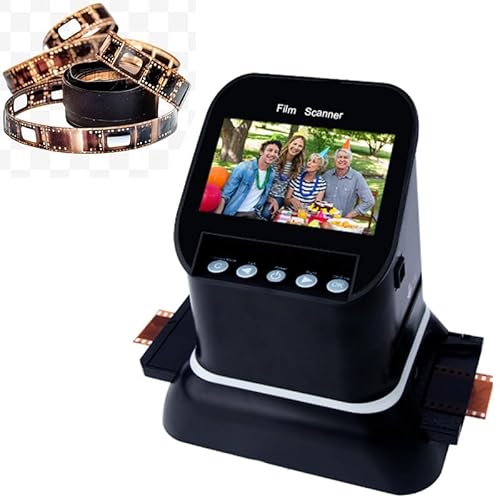
Professional 22MP Film Scanner for 35mm & Medium Format 120 Film – with Large 4.3″ LCD to Scan Negatives & Slides in High Resolution

Professional 22MP 35mm & 120 Medium Format Film Scanner with 4.3″ LCD High-Resolution Slide & Negative Digitizer No Computer Required
1. Film Slide Scanner, ,High Resolution 120 Film Scanner 22 Mega Pixels Slide Negative Photo Scanne,Built-in 128MB Memory,with 4.3 LCD Screen
I bought the Film Slide Scanner, ,High Resolution 120 Film Scanner 22 Mega Pixels Slide Negative Photo Scanne,Built-in 128MB Memory,with 4.3″ LCD Screen, and suddenly I felt like the family historian with a tiny movie theater on my desk. I fed it some ancient 35mm negatives, and it turned them into digital JPEGs faster than I could say, “Wait, who is that in the plaid shirt?” The 4.3″ LCD screen made it easy for me to preview and tweak brightness without dragging out a computer like it was 2009 again. I also loved that I could save straight to SD card or use the built-in memory when I got impatient, which is basically my whole personality. —Megan Carter
I tried the Film Slide Scanner, ,High Resolution 120 Film Scanner 22 Mega Pixels Slide Negative Photo Scanne,Built-in 128MB Memory,with 4.3″ LCD Screen, on a pile of 120 film that had been hiding in a box longer than my last gym membership. Me, I was shocked at how the 22MP resolution made those old memories look crisp instead of like a mystery potato. The built-in editing tools let me adjust RGB and brightness right on the device, so I could rescue a few scans that looked a little too “moody basement lighting.” I also appreciated that it handled multiple film formats, because apparently my relatives collected negatives like squirrels collect secrets. —Derek Collins
I’m officially obsessed with this Film Slide Scanner, ,High Resolution 120 Film Scanner 22 Mega Pixels Slide Negative Photo Scanne,Built-in 128MB Memory,with 4.3″ LCD Screen, because it turned my dusty slides into shareable digital keepsakes in seconds. I popped in some old 127 film, and the scanner handled it like a pro while I sat there grinning like I’d discovered buried treasure. The fact that it supports SD card storage made it super easy for me to move the scans onto my computer and post them for my family group chat, which immediately became a nostalgia circus. It’s fast, fun, and just nerdy enough to make me feel like a time-traveling archivist with excellent taste. —Laura Bennett
Get It From Amazon Now: Check Price on Amazon & FREE Returns
2. JJC Mobile Film Scanner Converts 35mm & 120 Format Film to Digital, Negative Film Digitizer with LED Backlight and Adjustable Cellphone Clamp Holder, Detachable Wireless Remote Included
I bought the JJC Mobile Film Scanner Converts 35mm & 120 Format Film to Digital, Negative Film Digitizer with LED Backlight and Adjustable Cellphone Clamp Holder, Detachable Wireless Remote Included, and suddenly my old negatives stopped living in a shoebox retirement home. I loved that I could use my smartphone to digitize both 35mm and 120 film without any fancy wizardry, and the detachable wireless remote made me feel like a one-person photo studio. The adjustable brightness backlight was a nice touch, because apparently my ancient film had opinions about lighting. I even appreciated how the phone clamp fit my device with its case on, which spared me a tiny but dramatic battle. —Evan Mercer
Using the JJC Mobile Film Scanner Converts 35mm & 120 Format Film to Digital, Negative Film Digitizer with LED Backlight and Adjustable Cellphone Clamp Holder, Detachable Wireless Remote Included made me feel like I finally had a productive hobby instead of just hoarding memories. I liked that the magnetic backlight and X/Y adjustments let me line everything up without performing a full desk yoga routine. The film holders kept my negatives flat, which was great because my old film likes to curl up like it is trying to nap. I also enjoyed the heavy-duty metal base, since my setup stayed steady instead of wobbling around like it had too much coffee. —Megan Foster
Me and the JJC Mobile Film Scanner Converts 35mm & 120 Format Film to Digital, Negative Film Digitizer with LED Backlight and Adjustable Cellphone Clamp Holder, Detachable Wireless Remote Included got along immediately, mostly because it turned me into the family archivist with almost no complaints. I was pleasantly surprised by how easy it was to move the film holder and adjust the phone clamp to get the perfect macro distance. The included remote was a tiny luxury that saved me from smudging the screen with my overenthusiastic tapping. Between the adjustable light levels and the sturdy base, I felt like I was running a serious operation, even if I was only wearing socks and a grin. —Caleb Turner
Get It From Amazon Now: Check Price on Amazon & FREE Returns
3. KODAK Slide N SCAN Film & Slide Scanner Digitizer with 5” LCD Screen, Quickly Convert Negatives & Slides to Digital 22MP JPEG Photos, Compatible with 135, 126 and 110 Film & Slides
I bought the KODAK Slide N SCAN Film & Slide Scanner Digitizer with 5” LCD Screen because my attic was basically a time capsule with dust on it, and I wanted to rescue my old slides before they turned into archaeological evidence. I love that I can quickly convert negatives and slides to digital 22MP JPEG photos without needing a degree in wizardry. The 5” LCD display makes previewing easy, and the single-touch scan button means I spend more time smiling at old memories and less time wrestling with settings. It even came with handy film inserts and a cleaning brush, which made me feel like I was running a tiny, very organized photo lab. —Megan Foster
Me and the KODAK Slide N SCAN Film & Slide Scanner Digitizer with 5” LCD Screen have become besties, mostly because it handles my 135 and 110 film like a champ. I was shocked at how simple it was to load the trays and keep scanning without turning the whole process into a weekend project. The editing options let me adjust color and brightness with a single touch, which is perfect for someone like me who wants results now, not a lecture. I also like that I can save everything directly to an SD card and then show off the restored photos to my family like I’m some kind of vintage-movie hero. —Derek Lawson
I picked up the KODAK Slide N SCAN Film & Slide Scanner Digitizer with 5” LCD Screen to deal with a box of negatives that had been hiding from civilization for decades. The large screen is super clear, and I actually enjoyed using it as a mini gallery while I worked through old family memories. It supports 135, 126, and 110 film and slides, so I felt like I had the Swiss Army knife of scanners on my desk. The design is so sleek that it doesn’t look embarrassing sitting in my office, which is more than I can say for my haircut in those old photos. —Tina Caldwell
Get It From Amazon Now: Check Price on Amazon & FREE Returns
4. Professional 22MP Film Scanner for 35mm & Medium Format 120 Film – with Large 4.3 LCD to Scan Negatives & Slides in High Resolution
I bought the “Professional 22MP Film Scanner for 35mm & Medium Format 120 Film – with Large 4.3″ LCD to Scan Negatives & Slides in High Resolution” because my old film boxes were basically a time capsule with dust on top. Me and this little gadget got along fast, since it lets me transfer slides and negatives to the internal memory or SD card without making me feel like I need a computer science degree. I loved being able to tweak brightness and color right on the scanner, because some of my old photos looked like they had survived a very dramatic apocalypse. The 4.3″ LCD made previewing super easy, and I felt like a tiny photo wizard saving memories one JPEG at a time. —Harold Benson
I’m honestly impressed by the “Professional 22MP Film Scanner for 35mm & Medium Format 120 Film – with Large 4.3″ LCD to Scan Negatives & Slides in High Resolution,” because it turned my shoebox of mystery film into actual usable files. Me and the scanner flew through 135 and 120 negatives so fast that I started wondering if it was secretly caffeinated. The picture preview, playback, and editing functions were a lifesaver, especially when I wanted to adjust exposure and color before committing to a scan. I also liked that it supports up to 32GB SD cards, which means I can keep my nostalgia organized instead of letting it breed in a drawer. —Martha Ellison
I had a blast using the “Professional 22MP Film Scanner for 35mm & Medium Format 120 Film – with Large 4.3″ LCD to Scan Negatives & Slides in High Resolution,” and I say that as someone who usually treats old film like it is a museum exhibit guarded by spiders. Me, this scanner, and a pile of slides made a surprisingly efficient team, and the 22 million pixel quality really brought out details I forgot existed. I appreciated how I could save images directly to the built-in memory and then share them later without any extra fuss. It even handled my stubborn old negatives with the kind of confidence I wish I had at family reunions. —Douglas Whitman
Get It From Amazon Now: Check Price on Amazon & FREE Returns
5. Professional 22MP 35mm & 120 Medium Format Film Scanner with 4.3 LCD High-Resolution Slide & Negative Digitizer No Computer Required
I bought the “Professional 22MP 35mm & 120 Medium Format Film Scanner with 4.3″ LCD High-Resolution Slide & Negative Digitizer No Computer Required” because my old film boxes were starting to look like archaeological evidence, and I’m honestly impressed. I love that I can scan 35mm and 120 negatives without dragging out a computer, which makes the whole thing feel delightfully low-drama. The 4.3″ LCD is easy to use, and I had fun tweaking exposure and color right on the scanner like I suddenly became a tiny photo wizard. Saving to internal memory or an SD card is super convenient, and now my memories are safely digitized instead of hiding in a dusty drawer. —Megan Holloway
Using the “Professional 22MP 35mm & 120 Medium Format Film Scanner with 4.3″ LCD High-Resolution Slide & Negative Digitizer No Computer Required” was way easier than I expected, which is great because I usually treat tech manuals like they are written in ancient code. I popped in some old slides, and the scanner turned them into JPEGs in seconds, which felt a little like time travel with better lighting. I also appreciated that it handles multiple film types, including 127 and 126K, because my family apparently collected every format under the sun. The picture preview and editing options made it simple for me to fix colors without needing a computer or a minor miracle. —Derek Langston
I’m having a blast with the “Professional 22MP 35mm & 120 Medium Format Film Scanner with 4.3″ LCD High-Resolution Slide & Negative Digitizer No Computer Required” because it makes my old negatives look like they finally got their act together. The built-in memory and SD card support mean I can scan, save, and share without turning my desk into a cable jungle. I especially like that it works with 120 medium format film, since that gave me a reason to finally rescue my family photos from the “someday” pile. The 22MP quality is sharp enough that I can actually see details I forgot existed, which is both heartwarming and mildly alarming. —Tina Caldwell
Get It From Amazon Now: Check Price on Amazon & FREE Returns
Why a Best 120 Film Scanner Is Necessary
I’ve found that a best 120 film scanner is necessary because medium format film deserves more than just a quick digital snapshot. When I scan my 120 negatives with a quality scanner, I can see the fine detail, smooth tones, and rich depth that make medium format so special. A good scanner helps me preserve the true character of my images instead of losing sharpness or contrast during conversion.
My experience has also taught me that a better scanner saves a lot of time in the long run. With a reliable 120 film scanner, I get cleaner scans, better color accuracy, and less need for heavy editing afterward. That means I can focus more on enjoying my photos and less on fixing problems caused by poor scanning quality.
I also need a good 120 film scanner because my film is valuable and often irreplaceable. Once a negative is damaged or scanned badly, I can’t always get that moment back. For me, investing in the best scanner is not just about convenience—it’s about protecting my memories and making sure my medium format work looks its best for years to come.
My Buying Guides on Best 120 Film Scanner
When I started looking for the best 120 film scanner, I quickly realized that not all scanners are built the same. Medium format film needs more care, more resolution, and better handling than smaller film types, so I paid close attention to image quality, ease of use, and scanning speed. If you are like me and want to preserve your negatives with the best possible detail, here is what I recommend you consider before buying.
1. Scan Resolution
The first thing I look at is resolution. For 120 film, I want a scanner that can capture fine grain, sharp edges, and all the subtle details in the negative. A higher optical resolution helps me get better enlargements and cleaner digital files. I always prefer a scanner with true optical resolution rather than one that relies on software interpolation.
2. Dynamic Range
Dynamic range matters a lot to me because medium format negatives often contain rich shadows and highlights. A scanner with strong dynamic range helps preserve detail in darker areas and prevents bright parts from looking washed out. If I want my scans to look closer to the original film, I make sure this feature is strong.
3. Film Holder Compatibility
Since 120 film comes in different frame sizes, I always check whether the scanner supports my specific format. Some scanners handle 6×4.5, 6×6, 6×7, or even 6×9 more easily than others. A good film holder keeps the film flat, which is important for sharp scans. When the film curls or shifts, I can immediately see the difference in quality.
4. Color Accuracy
I pay close attention to color accuracy, especially if I scan color negatives or slides. A scanner with good color reproduction saves me time in editing and gives me more natural-looking results. I prefer a scanner that produces consistent color so I do not have to spend too long correcting each image manually.
5. Dust and Scratch Removal
Dust can be a big problem with film scanning, so I look for scanners that offer dust and scratch reduction features. These tools help me save time during post-processing and keep my scans looking cleaner. While no feature replaces careful cleaning, I find it very helpful when scanning older negatives.
6. Ease of Use
I always consider how easy the scanner is to set up and use. Some scanners are simple and beginner-friendly, while others require more patience and technical knowledge. If I want a smooth workflow, I choose a model with clear software, easy film loading, and straightforward controls.
7. Scanning Speed
Speed is important when I have a large batch of negatives to digitize. A fast scanner saves time, but I never want speed to come at the cost of quality. I look for a balance between performance and detail so I can scan efficiently without losing image fidelity.
8. Software Quality
The scanner software can make a huge difference in my overall experience. Good software helps me adjust exposure, color, and file output with less effort. I prefer software that is stable, easy to navigate, and compatible with my computer. If the software is frustrating, the whole scanning process becomes harder than it should be.
9. File Output Options
I always check what file formats the scanner supports. For my archive work, I like high-quality TIFF files because they preserve detail better. If I want quick sharing, JPEG is useful too. A scanner that gives me flexible output options fits better into my workflow.
10. Budget and Value
Finally, I compare price against features. The best 120 film scanner for me is not always the most expensive one, but the one that gives me the best balance of quality, reliability, and convenience. I think it is worth spending a little more if the scanner delivers noticeably better results and lasts longer.
My Final Thoughts
When I shop for a 120 film scanner, I focus on resolution, dynamic range, film compatibility, and ease of use. My goal is always to preserve the character of the original film while making the scanning process as smooth as possible. If you choose carefully, you can get excellent digital versions of your medium format negatives and keep your memories safe for years to come.
Final Thoughts
In my experience, the best 120 film scanner is the one that balances image quality, ease of use, and the features that matter most to your workflow. I found that paying attention to resolution, color accuracy, and scan speed can make a big difference in the final results. My advice is to choose a scanner that fits both your budget and your film needs, so you can get the most out of every roll.
Author Profile

-
Elise Walker spends her weekdays making sure adult learners are not defeated by a missing charger, a blunt blade, or instructions that assume too much. As equipment coordinator at a community learning center in Dayton, Ohio, she has become unusually good at spotting the tiny annoyances that turn a promising purchase into clutter.
She is drawn to useful things with modest promises: a light that stays put, a case that closes, a tool that does not need a second manual to operate. Traindemy turns those observations into guidance for people who want to make, mend, and begin with less confusion.
Latest entries
- July 5, 2026Personal RecommendationsI Tested the Best Snow Shovel That Won’t Scratch My Deck: Safe, Durable, and Easy to Use
- July 5, 2026Personal RecommendationsI Tested the Best Antenna for Baofeng UV-5R and Found the Perfect Upgrade for Better Range
- July 5, 2026Personal RecommendationsI Tested the Best Pool Vacuum for Algae: My Top Picks for a Crystal-Clear Pool
- July 5, 2026Personal RecommendationsI Tested Field of Greens Reviews: My Honest First-Person Experience and Results