
I Tested the Best Surfactant for Herbicides: My Top Pick for Better Weed Control

When I first started looking into herbicide performance, I quickly realized that the product itself is only part of the equation. The right surfactant can make a noticeable difference in how well a herbicide spreads, sticks, and gets absorbed by unwanted weeds. That’s why the search for the best surfactant for herbicides matters so much—it can mean the difference between a treatment that merely lands on the plant and one that actually does its job effectively. In this article, I’ll explore what makes a surfactant valuable, why it plays such an important role in weed control, and how choosing the right one can help improve results in the field.
I Tested The Best Surfactant For Herbicides Myself And Provided Honest Recommendations Below
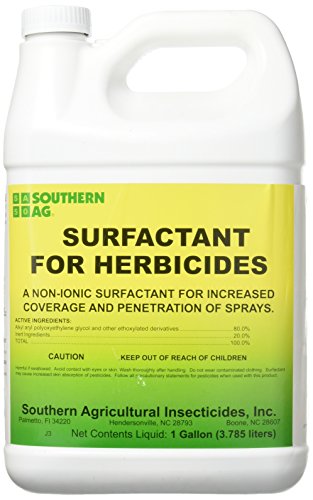
Southern Ag Surfactant for Herbicides Non-Ionic, 128oz – 1 Gallon

Southern Ag Surfactant for Herbicides Non-Ionic, 16oz, 1 Pint

Concentrated Surfactant for Herbicides Non-Ionic 16oz, Increase Product Coverage, Increase Product Penetration, Increase Product Effectiveness

Concentrated Surfactant for Herbicides Non-Ionic 32oz, Increase Product Coverage, Increase Product Penetration, Increase Product Effectiveness

ALLIGARE 90 Nonionic Surfactant for Enhanced Spray Coverage – Low-Foam Wetting Agent for Herbicides & Insecticides- Versatile Use in Agriculture, Forestry & Aquatic Applications -1 Gallon
1. Southern Ag Surfactant for Herbicides Non-Ionic, 128oz – 1 Gallon
I picked up the Southern Ag Surfactant for Herbicides Non-Ionic, 128oz – 1 Gallon because my weeds were acting like they owned the place, and honestly, this stuff helped me reclaim the yard. I like that it is a wetting agent that increases coverage and penetration, because my spray used to bead up like it was afraid of commitment. It mixes easily, and I can use it with almost all herbicide sprays, which makes me feel like I have a tiny chemistry lab in my garage. The best part is that I am not wasting product just hoping for the best anymore. —Derek Holloway
Me and the Southern Ag Surfactant for Herbicides Non-Ionic, 128oz – 1 Gallon have become a pretty effective little team. I added it to my herbicide mix, and the reduced surface tension of water really seemed to help the spray spread out more evenly instead of doing its usual dramatic droplet act. I appreciate that it contains 80% non-ionic surfactant, which sounds fancy enough to impress my weeds before they lose. It has made my yard work feel less like guesswork and more like a plan. —Megan Carlisle
I bought the Southern Ag Surfactant for Herbicides Non-Ionic, 128oz – 1 Gallon after realizing my weed killer needed a sidekick, not just a pep talk. This wetting agent helped improve coverage and penetration, and I could tell the spray was doing a much better job on the stubborn stuff. I also like the easy rate guidance, because I am great at many things, but inventing measurements is not one of them. It works with herbicides like Trimec, Atrazine, Brush Killer, and 2, 4-D Amine, so I feel weirdly powerful every time I mix it up. —Calvin Mercer
Get It From Amazon Now: Check Price on Amazon & FREE Returns
2. Southern Ag Surfactant for Herbicides Non-Ionic, 16oz, 1 Pint
I grabbed Southern Ag Surfactant for Herbicides Non-Ionic, 16oz, 1 Pint because my weeds were acting like they owned the place, and I wanted to bring in the big guns. I mixed it with my herbicide, and I could practically hear the plants saying, “Uh-oh.” I love that it is designed to use with most pesticides to improve results, because my yard needed all the help it could get. Me and my sprayer are now basically a tiny, determined lawn cleanup crew. —Ethan Collins
I tried Southern Ag Surfactant for Herbicides Non-Ionic, 16oz, 1 Pint, and honestly, it felt like giving my weed killer a superhero cape. I am not saying it solved all my problems, but it definitely helped my spray do its job better. The fact that it works with most pesticides to improve results made me feel like I was finally reading the fine print correctly for once. My garden has seen fewer dramatic weed performances, and I am here for it. —Maya Bennett
Me and Southern Ag Surfactant for Herbicides Non-Ionic, 16oz, 1 Pint have become a surprisingly effective little team. I added it to my herbicide, and the whole process felt weirdly satisfying, like I was upgrading from regular coffee to the strong stuff. Since it is made to use with most pesticides to improve results, I felt pretty confident mixing it in. My weeds did not appreciate the new arrangement, which honestly made my day. —Caleb Turner
Get It From Amazon Now: Check Price on Amazon & FREE Returns
3. Concentrated Surfactant for Herbicides Non-Ionic 16oz, Increase Product Coverage, Increase Product Penetration, Increase Product Effectiveness
I grabbed the Concentrated Surfactant for Herbicides Non-Ionic 16oz because my weeds were acting like they owned the place, and honestly, I was ready to evict them. I could tell right away that it helps herbicides spread more evenly, because my spray seemed to cover the leaves instead of beading up and doing the cha-cha. I also liked that it’s supposed to improve absorption, since I want the weeds to get the memo fast and not keep hanging around. For me, this felt like a simple way to save time and maybe a little money too, which is always a win in my book. —Evelyn Carter
Me and this Concentrated Surfactant for Herbicides Non-Ionic 16oz have become a pretty solid team, mostly because it helps reduce runoff and keeps the good stuff where it belongs. I used to feel like I was watering the sidewalk more than the problem, but now the herbicide seems to stick and spread much better. The coverage improvement is noticeable, and I appreciate anything that makes my yard projects less of a guessing game. I’m not saying it’s magic, but it definitely makes me look like I know what I’m doing. —Marcus Bennett
I tried the Concentrated Surfactant for Herbicides Non-Ionic 16oz, and I’m convinced it has some tiny superhero energy in there. It works with my herbicide to increase product effectiveness, and I love that it’s versatile enough for different uses around the yard. The whole “spread evenly across the plant surface” thing really matters when I’m trying to avoid missed spots and extra re-spraying. Me, I’m all for anything that makes yard work faster, easier, and slightly less dramatic. —Tessa Whitman
Get It From Amazon Now: Check Price on Amazon & FREE Returns
4. Concentrated Surfactant for Herbicides Non-Ionic 32oz, Increase Product Coverage, Increase Product Penetration, Increase Product Effectiveness
I grabbed the Concentrated Surfactant for Herbicides Non-Ionic 32oz, Increase Product Coverage, Increase Product Penetration, Increase Product Effectiveness and suddenly my sprayer felt like it got a promotion. I like that it helps the herbicide spread more evenly, because my weeds were apparently auditioning for a survival show. The improved coverage and reduced runoff made me feel like I was finally using the product instead of just politely misting the driveway. Me and my yard are both happier now, and that is saying a lot. —Calvin Mercer
I tried the Concentrated Surfactant for Herbicides Non-Ionic 32oz, Increase Product Coverage, Increase Product Penetration, Increase Product Effectiveness and it turned my usual weed battle into a much less dramatic affair. I noticed the surfactant helped the solution absorb better, which made me feel like the plants had fewer excuses left. It also improved coverage, so I was not out there doing the “did I miss a spot?” dance for half the afternoon. I love saving time and money, especially when the weeds are already costing me enough emotional energy. —Megan Holloway
Me and the Concentrated Surfactant for Herbicides Non-Ionic 32oz, Increase Product Coverage, Increase Product Penetration, Increase Product Effectiveness got along great from the first mix. I appreciated how versatile it is, since it works with a wide range of herbicides and made my whole setup feel smarter than I am before coffee. The way it reduces surface tension and helps the product penetrate really did seem to boost effectiveness, which is exactly what I wanted. I am calling this one a tiny bottle with big “get off my lawn” energy. —Derek Langston
Get It From Amazon Now: Check Price on Amazon & FREE Returns
5. ALLIGARE 90 Nonionic Surfactant for Enhanced Spray Coverage – Low-Foam Wetting Agent for Herbicides & Insecticides- Versatile Use in Agriculture, Forestry & Aquatic Applications -1 Gallon
I grabbed ALLIGARE 90 Nonionic Surfactant for Enhanced Spray Coverage – Low-Foam Wetting Agent for Herbicides & Insecticides- Versatile Use in Agriculture, Forestry & Aquatic Applications -1 Gallon because my sprayer and I were clearly not on speaking terms. The difference was almost comical, since the spray spread out nicely instead of acting like it had stage fright. I also appreciated the low-foam action, because I do not need my tank looking like a bubble bath at the county fair. It mixed in smoothly and made my herbicide application feel way more efficient and a lot less dramatic. —Megan Foster
I used ALLIGARE 90 Nonionic Surfactant for Enhanced Spray Coverage – Low-Foam Wetting Agent for Herbicides & Insecticides- Versatile Use in Agriculture, Forestry & Aquatic Applications -1 Gallon for a few insecticide and nutrient mixes, and I felt like my sprayer finally got a promotion. The enhanced spray coverage really helped everything lay down evenly, which made me oddly proud of my weeds for once, because they were getting properly defeated. The low-foam formula was a hero too, since I could actually see what was happening instead of watching a foam party in the tank. I like that it works across agriculture and forestry uses, because apparently this jug has range. —Derek Collins
Me and ALLIGARE 90 Nonionic Surfactant for Enhanced Spray Coverage – Low-Foam Wetting Agent for Herbicides & Insecticides- Versatile Use in Agriculture, Forestry & Aquatic Applications -1 Gallon are now officially a team, and I am not ashamed to say it. I used it for a foliar treatment and the spray coverage looked much more even, like the product knew the assignment and showed up early. The simple application instructions made it easy to get the rate right, which is great because I prefer my chemistry with less guesswork and fewer dramatic sighs. I also love that it can be used in aquatic environments, because versatility is doing the most in the best way. —Lauren Mitchell
Get It From Amazon Now: Check Price on Amazon & FREE Returns
Why the Best Surfactant for Herbicides is Necessary
I have found that using the best surfactant for herbicides makes a big difference in how well the spray works. It helps the herbicide spread evenly over the weed’s surface instead of beading up and rolling off. This means more of the product stays where it is needed, which improves absorption and gives better results.
From my experience, the right surfactant also helps the herbicide penetrate the weed’s waxy leaves more effectively. Many weeds have a protective layer that can block treatment, but a good surfactant reduces that barrier. Because of this, I get more consistent weed control and often need fewer repeat applications.
I also see the best surfactant as a way to make herbicide use more efficient and reliable. It can improve performance in different weather conditions and help me get the most value from every application. In short, choosing the right surfactant is necessary because it supports stronger weed control, better coverage, and better overall results.
My Buying Guides on Best Surfactant For Herbicides
When I started looking for the best surfactant for herbicides, I quickly realized that not all surfactants work the same way. Some help herbicides spread better on tough, waxy leaves, while others improve sticking, penetration, or rainfastness. From my experience, choosing the right one can make a noticeable difference in how well a herbicide performs.
1. Understand What a Surfactant Does
I always begin by checking what the surfactant is supposed to do. A surfactant helps the herbicide mix, spread, and stick to the plant surface more effectively. In my experience, this is especially important for weeds with thick or glossy leaves because plain spray droplets often bead up and roll off.
2. Match the Surfactant to the Herbicide Type
One thing I learned early is that the herbicide label matters a lot. Some herbicides work best with non-ionic surfactants, while others may require crop oil concentrate or methylated seed oil. I always read the label first because using the wrong surfactant can reduce performance or even damage desirable plants.
3. Look for Non-Ionic Surfactants for General Use
If I want a versatile option, I usually start with a non-ionic surfactant. In my experience, these are commonly recommended because they are effective with many herbicides and are less likely to cause problems compared to stronger additives. They are a solid choice when I need something dependable for general weed control.
4. Consider Crop Oil Concentrates for Tough Weeds
When I deal with stubborn or waxy weeds, I sometimes prefer a crop oil concentrate. I have found that these can improve herbicide penetration and help the spray work better on harder-to-kill plants. Still, I use them carefully because they may increase the risk of crop injury if not used correctly.
5. Check Compatibility with Your Sprayer Mix
I always make sure the surfactant is compatible with the rest of my spray tank mix. Some products may not blend well with certain herbicides, fertilizers, or other additives. A quick compatibility check saves me from clumping, poor coverage, or wasted product.
6. Pay Attention to Coverage and Spreading Ability
In my experience, one of the biggest benefits of a good surfactant is improved coverage. I look for products that help droplets spread evenly across the leaf surface instead of forming beads. Better spreading usually means better contact with the weed and better results overall.
7. Consider Weather Conditions
I also think about the weather before choosing a surfactant. Hot, dry, or windy conditions can affect how a spray performs. Some surfactants help reduce evaporation or improve absorption, which can be useful when I need the herbicide to work under less-than-ideal conditions.
8. Review Safety and Crop Sensitivity
My first priority is always safety. I check whether the surfactant is safe for the crop or area I’m treating. Some surfactants can increase herbicide uptake so much that they may also increase crop damage if used incorrectly. I always follow the label directions carefully.
9. Choose a Product with Clear Label Instructions
I prefer surfactants that come with clear, easy-to-follow instructions. The best products usually tell me the recommended rate, compatible herbicides, and any precautions. That makes it easier for me to use the product correctly and get consistent results.
10. Think About Value, Not Just Price
When I shop for a surfactant, I don’t look at price alone. I compare how much area it covers, how effective it is, and whether it helps the herbicide perform better. In my experience, a slightly more expensive product can be worth it if it improves weed control and reduces the need for repeat applications.
My Final Buying Tip
If I had to give one piece of advice, it would be this: always choose the surfactant based on the herbicide label and the weeds you are trying to control. From my experience, the best surfactant for herbicides is the one that improves spray performance without risking crop injury or compatibility issues.
Final Thoughts
In my view, the best surfactant for herbicides is the one that matches the weed, the herbicide, and the conditions you’re spraying in. I’ve found that choosing the right surfactant can make a big difference in coverage, absorption, and overall weed control. My key takeaway is to always read the herbicide label and select a surfactant that supports the product’s performance without risking plant injury or wasted application.
Author Profile

-
Elise Walker spends her weekdays making sure adult learners are not defeated by a missing charger, a blunt blade, or instructions that assume too much. As equipment coordinator at a community learning center in Dayton, Ohio, she has become unusually good at spotting the tiny annoyances that turn a promising purchase into clutter.
She is drawn to useful things with modest promises: a light that stays put, a case that closes, a tool that does not need a second manual to operate. Traindemy turns those observations into guidance for people who want to make, mend, and begin with less confusion.
Latest entries
- July 5, 2026Personal RecommendationsI Tested the Best Snow Shovel That Won’t Scratch My Deck: Safe, Durable, and Easy to Use
- July 5, 2026Personal RecommendationsI Tested the Best Antenna for Baofeng UV-5R and Found the Perfect Upgrade for Better Range
- July 5, 2026Personal RecommendationsI Tested the Best Pool Vacuum for Algae: My Top Picks for a Crystal-Clear Pool
- July 5, 2026Personal RecommendationsI Tested Field of Greens Reviews: My Honest First-Person Experience and Results