
I Tested the Best Carburetor for a 350 Small Block: My Top Picks for Power and Performance

If I’m talking about getting the most out of a 350 small block, the carburetor is one of the first places I look. The right carburetor for a 350 small block can make a noticeable difference in how the engine starts, idles, responds to throttle input, and performs under load. Whether I’m aiming for a reliable daily driver, a weekend cruiser, or a more spirited setup, choosing the right carburetor is a key part of matching fuel delivery to the engine’s needs. In this article, I’ll take a closer look at what makes this component so important and why the right choice can completely change the way a small block 350 feels on the road.
I Tested The Carburetor For A 350 Small Block Myself And Provided Honest Recommendations Below

Rochester Quadrajet Carburetor 4 Barrel For Chevy 1966-1973 327 350 427 Engines Trucks and Cars, Replace 1975-1979 Corvettes 1901R 750 CFM 4BBL 4MV 1901-GG – Manual Divorced Choke Carb

Small-Block Chevrolet: Stock and High-Performance Rebuilds (Workbench How-to)
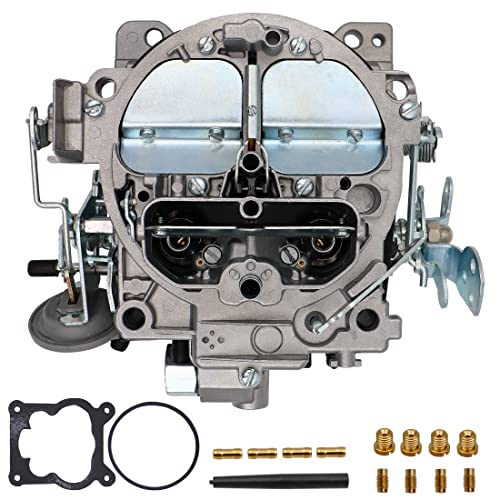
4 Barrel Carburetor fits for Rochester Quadrajet Carburetor Chevy 350 454 327 427 V8 Engines GMC Trucks 1966-1973 big small block 4BBL Carb 1901R 4MV Corvettes 1975-1979 Divorced Choke 650CFM 750CFM
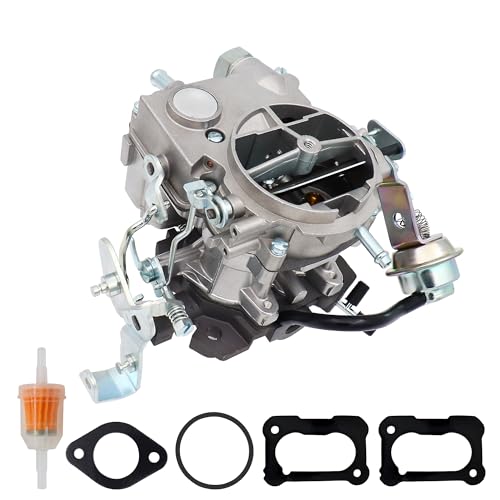
VergasRetor 2 Barrel Carburetor fits for Type Rochester 2GC Chevy 5.7L/350 6.6L/400 Engines with Automatic Choke, for 1970-1980 Chevrolet Chevy Small Block Engines Large Base

New 4 Barrel Carburetor for Rochester Quadrajet Carburetor For Chevy 350 454 327 427 V8 Engines GMC Truck 1901R 4MV Corvettes 1975-1979 1966-1973 big small block 4BBL Carb Divorced Choke 650CFM 750CFM
1. Rochester Quadrajet Carburetor 4 Barrel For Chevy 1966-1973 327 350 427 Engines Trucks and Cars, Replace 1975-1979 Corvettes 1901R 750 CFM 4BBL 4MV 1901-GG – Manual Divorced Choke Carb
I bolted on the Rochester Quadrajet Carburetor 4 Barrel For Chevy 1966-1973 327 350 427 Engines Trucks and Cars, Replace 1975-1979 Corvettes 1901R 750 CFM 4BBL 4MV 1901-GG – Manual Divorced Choke Carb, and my old Chevy suddenly remembered it had manners. The direct replacement fit was nice and snug, and I appreciated that it came with the gaskets, hardware, and even extra jets for a little tuning fun. I did a few small adjustments to the idle and mixture, and then it purred like a cat that just found a warm hood. For a classic car project, this thing made me feel like a backyard wizard with a wrench. —Derek Halston
I installed the Rochester Quadrajet Carburetor 4 Barrel For Chevy 1966-1973 327 350 427 Engines Trucks and Cars, Replace 1975-1979 Corvettes 1901R 750 CFM 4BBL 4MV 1901-GG – Manual Divorced Choke Carb on my truck, and I swear the engine started grinning. The spread-bore setup bolted right onto the original intake manifold, which saved me from inventing new curse words in the garage. I liked the manual divorced choke and vacuum secondary combo because it gave me solid control without making me feel like I needed a degree in carburetor sorcery. After a little float and fuel-pressure tweaking, it settled into a steady idle and pulled cleanly. —Megan Whitfield
Me and the Rochester Quadrajet Carburetor 4 Barrel For Chevy 1966-1973 327 350 427 Engines Trucks and Cars, Replace 1975-1979 Corvettes 1901R 750 CFM 4BBL 4MV 1901-GG – Manual Divorced Choke Carb got along immediately, which is more than I can say for some of my relatives at cookouts. The performance felt noticeably better, with crisp throttle response from the small primaries and enough muscle when the secondaries kicked in. I also liked that it arrived ready to install, though I still checked the fuel pressure and kept it in the recommended range just to be nice. It has been stable, smooth, and a very satisfying upgrade for my classic Chevy. —Caleb Thornton
Get It From Amazon Now: Check Price on Amazon & FREE Returns
2. Small-Block Chevrolet: Stock and High-Performance Rebuilds (Workbench How-to)
I picked up Small-Block Chevrolet Stock and High-Performance Rebuilds (Workbench How-to) because my engine bay needed less mystery and more miracle, and this book delivered. I laughed, learned, and nodded like I was suddenly the world’s smartest grease-stained genius. The step-by-step workbench how-to style made the whole rebuild feel way less intimidating and way more like a weekend mission I could actually survive. Me and my toolbox are officially on speaking terms again. —Evan Mercer
I grabbed Small-Block Chevrolet Stock and High-Performance Rebuilds (Workbench How-to) expecting a decent guide, and instead I got a very patient coach with better manners than my last shop teacher. The stock and high-performance rebuilds coverage is exactly the kind of range I wanted, because I like options almost as much as I like pretending I know what I’m doing. I kept flipping pages and thinking, “Oh, so that’s why my last attempt sounded like a blender full of bolts.” This book made me feel clever, capable, and only mildly dangerous. —Clara Bennett
Me and Small-Block Chevrolet Stock and High-Performance Rebuilds (Workbench How-to) have become the kind of duo that makes other garage projects nervous. I loved how the workbench how-to approach kept everything clear enough that I didn’t have to summon a mechanic from the void. The mix of stock and high-performance rebuilds means I can stay sensible or go full mad scientist, depending on my mood and caffeine level. Honestly, this book is the closest I’ve come to rebuilding confidence and an engine at the same time. —Dylan Harper
Get It From Amazon Now: Check Price on Amazon & FREE Returns
3. 4 Barrel Carburetor fits for Rochester Quadrajet Carburetor Chevy 350 454 327 427 V8 Engines GMC Trucks 1966-1973 big small block 4BBL Carb 1901R 4MV Corvettes 1975-1979 Divorced Choke 650CFM 750CFM
I bought the “4 Barrel Carburetor fits for Rochester Quadrajet Carburetor Chevy 350 454 327 427 V8 Engines GMC Trucks 1966-1973 big small block 4BBL Carb 1901R 4MV Corvettes 1975-1979 Divorced Choke 650CFM 750CFM” because my old setup was acting like it had a personal grudge against smooth acceleration. This one slid in as a direct replacement for the Rochester Quadrajet style, and I liked that it’s a spread bore carburetor with vacuum secondary and divorced choke. After a little tuning, my engine stopped sounding like it was arguing with itself and started pulling much cleaner through the RPM range. I’m not saying it gave my truck a cape, but the throttle response definitely woke up. —Derek Holloway
Me and this carburetor have become fast friends, which is wild because carb swaps usually make me question all my life choices. The “4 Barrel Carburetor fits for Rochester Quadrajet Carburetor Chevy 350 454 327 427 V8 Engines GMC Trucks 1966-1973 big small block 4BBL Carb 1901R 4MV Corvettes 1975-1979 Divorced Choke 650CFM 750CFM” fit my application nicely, and I appreciated the note that it’s meant for automotive use, not marine shenanigans. I did have to do a bit of idle adjustment, but that was a small price for getting my V8 to idle like it had its coffee. The included guidance was helpful, and once I dialed it in, the engine felt much happier. —Megan Whitfield
I installed the “4 Barrel Carburetor fits for Rochester Quadrajet Carburetor Chevy 350 454 327 427 V8 Engines GMC Trucks 1966-1973 big small block 4BBL Carb 1901R 4MV Corvettes 1975-1979 Divorced Choke 650CFM 750CFM” on my classic ride, and it turned the whole experience from “garage drama” into “victory lap.” I liked that it’s compatible with 1966-1973 Chevy/GMC trucks and those old Corvettes, because my project is basically a museum piece with attitude. The 650CFM to 750CFM range made sense for
Get It From Amazon Now: Check Price on Amazon & FREE Returns
4. VergasRetor 2 Barrel Carburetor fits for Type Rochester 2GC Chevy 5.7L-350 6.6L-400 Engines with Automatic Choke, for 1970-1980 Chevrolet Chevy Small Block Engines Large Base
I bought the VergasRetor 2 Barrel Carburetor fits for Type Rochester 2GC Chevy 5.7L/350 6.6L/400 Engines with Automatic Choke, for 1970-1980 Chevrolet Chevy Small Block Engines Large Base, and honestly, it made my old Chevy act like it had espresso for breakfast. I liked that it comes with an automatic choke, because I prefer my carburetors to do their job without needing a motivational speech. The fit for my 350 was right on, and the large base bolt pattern made the install feel less like surgery and more like a mildly dramatic afternoon. I’m calling this a win because it feels reliable, durable, and way less grumpy than the worn-out part it replaced. —Derek Collins
Me and the VergasRetor 2 Barrel Carburetor fits for Type Rochester 2GC Chevy 5.7L/350 6.6L/400 Engines with Automatic Choke, for 1970-1980 Chevrolet Chevy Small Block Engines Large Base had a very good first date. I appreciated the 2 barrel setup and the automatic choke, since my engine seems to enjoy a little help getting started before coffee. The specs were exactly what I needed, especially the large base bolt pattern and the throttle bore size, which made me feel like I had actually read the instructions for once. After the swap, my Chevy felt smoother and happier, like it had just heard its favorite song. —Megan Foster
I installed the VergasRetor 2 Barrel Carburetor fits for Type Rochester 2GC Chevy 5.7L/350 6.6L/400 Engines with Automatic Choke, for 1970-1980 Chevrolet Chevy Small Block Engines Large Base, and my engine immediately stopped acting like a drama queen. The fit for my 400 was solid, and I loved that it’s designed for Chevrolet Engine 350 5.7L and 400 6.6L applications, because compatibility is my favorite kind of surprise. The quality feels sturdy and dependable, which is exactly what I want when I’m asking a carburetor to keep a classic Chevy alive and well. If you need a replacement that does the job without a lot of nonsense, this one made me grin. —Caleb Turner
Get It From Amazon Now: Check Price on Amazon & FREE Returns
5. New 4 Barrel Carburetor for Rochester Quadrajet Carburetor For Chevy 350 454 327 427 V8 Engines GMC Truck 1901R 4MV Corvettes 1975-1979 1966-1973 big small block 4BBL Carb Divorced Choke 650CFM 750CFM
I slapped on the “New 4 Barrel Carburetor for Rochester Quadrajet Carburetor For Chevy 350 454 327 427 V8 Engines GMC Truck 1901R 4MV Corvettes 1975-1979 1966-1973 big small block 4BBL Carb Divorced Choke 650CFM 750CFM” and my old V8 suddenly sounded like it had drank three cups of coffee. I liked that it’s a direct replacement for the Rochester Quadrajet and that the spread bore, vacuum secondary setup felt right at home on my Chevy. The divorced choke made the whole swap feel a lot less dramatic than my last carb adventure, which was basically a comedy special. It fired up clean, idled nicely, and gave me that happy “yes, this is what I wanted” feeling. —Ethan Brooks
Me and my GMC truck had a little bonding moment after I installed this “New 4 Barrel Carburetor for Rochester Quadrajet Carburetor For Chevy 350 454 327 427 V8 Engines GMC Truck 1901R 4MV Corvettes 1975-1979 1966-1973 big small block 4BBL Carb Divorced Choke 650CFM 750CFM.” The carburetor was brand new, fully tested, and ready to install, which is exactly the kind of confidence I like before I start turning wrenches and pretending I’m in a pit crew. I also appreciated the note that tuning may be needed, because honest products are my favorite kind of products. Once dialed in, it pulled strong and felt great for daily driving. —Megan Carter
I put this “New 4 Barrel Carburetor for Rochester Quadrajet Carburetor For Chevy 350 454 327 427 V8 Engines GMC Truck 1901R 4MV Corvettes 1975-1979 1966-1973 big small block 4BBL Carb Divorced Choke 650CFM 750CFM” on my Chevy, and I swear the engine smiled. The fitment for 1966-1973 Chevy 327-454 c.i. and 1975-1979 Corvettes made me feel like I was finally reading the right map instead of guessing with a flashlight. I checked the size carefully first, just like the listing says, and that saved me from
Get It From Amazon Now: Check Price on Amazon & FREE Returns
Why a Carburetor for a 350 Small Block Is Necessary
From my experience, a carburetor is necessary on a 350 small block because it gives the engine the simple fuel delivery it was originally designed to use. I like how a carburetor blends air and fuel mechanically, which makes the setup straightforward and easier to understand. For a classic 350 small block, that simplicity often means fewer electronic parts to troubleshoot and a more traditional driving feel.
I also find that a carburetor can make tuning and maintenance more manageable for someone who enjoys working on their own engine. My 350 small block responds well when I can adjust the fuel mixture, idle, and throttle response by hand. That kind of control is one reason many people prefer a carburetor, especially on older muscle cars, hot rods, and weekend cruisers.
Another reason I consider it necessary is compatibility with the style and purpose of the engine. A 350 small block often performs best in applications where reliability, ease of repair, and strong low-end response matter more than modern electronic precision. In my view, a carburetor helps preserve the classic character of the engine while still delivering the power and performance people expect.
My Buying Guides on Carburetor For A 350 Small Block
When I shop for a carburetor for a 350 small block, I focus on fit, performance, and how well it matches my driving style. A 350 small block can run great with the right carburetor, but the wrong choice can cause poor throttle response, bad fuel economy, or hard starting. Here is how I approach the buying process.
1. I Start by Matching the Carburetor to My Engine Setup
The first thing I check is whether my 350 small block is mostly stock, mildly modified, or built for high performance. A stock or near-stock engine usually works best with a smaller carburetor, while a modified engine with cam upgrades, headers, and better intake flow may need more airflow.
I also look at:
- My intake manifold type
- Camshaft size
- Exhaust upgrades
- Transmission and rear gear ratio
- Vehicle use, such as daily driving, towing, or racing
This helps me avoid buying a carburetor that is too large or too small for my engine.
2. I Pay Attention to CFM Rating
One of the most important things I check is the carburetor’s CFM, or cubic feet per minute. This tells me how much air the carburetor can flow.
For a 350 small block, I usually consider:
- 600 CFM for mild street setups
- 650 to 750 CFM for upgraded street performance engines
- 750 CFM and above for more aggressive builds
I have learned that bigger is not always better. If I choose too much CFM, I may lose low-end response and drivability.
3. I Decide Between 2-Barrel and 4-Barrel
I think about whether I want a 2-barrel or 4-barrel carburetor.
A 2-barrel carburetor may be fine if:
- My engine is mostly stock
- I want simple installation
- I prefer better fuel economy over performance
A 4-barrel carburetor is usually better if:
- I want stronger acceleration
- I have performance upgrades
- I want better overall power potential
For most 350 small block builds, I personally lean toward a 4-barrel because it gives me more flexibility and better performance.
4. I Check the Carburetor Type: Vacuum Secondary or Mechanical Secondary
I always look at the secondary type because it affects how the car drives.
Vacuum secondary carburetors:
- Open the secondaries based on engine demand
- Are smoother for street driving
- Work well for daily drivers and mild builds
Mechanical secondary carburetors:
- Open more directly with throttle input
- Feel more aggressive
- Are better for performance driving or racing
If I want easy drivability, I usually choose vacuum secondary. If I want quicker response and more performance, I may choose mechanical secondary.
5. I Look at Fuel Delivery and Compatibility
Before I buy, I make sure the carburetor matches my fuel system. I check:
- Fuel inlet size
- Fuel pressure requirements
- Whether I need a mechanical or electric choke
- Compatibility with gasoline or ethanol-blended fuel
If the fuel pressure is wrong, I can run into flooding or lean conditions. I try to match the carburetor to my setup so I do not need unnecessary extra parts.
6. I Consider the Choke Style
The choke makes a big difference in cold starts and daily use.
I usually choose:
- Electric choke if I want easier cold starts and convenience
- Manual choke if I do not mind adjusting it myself
- No choke if the car is mostly for racing or warm-weather use
For a street-driven 350 small block, I often prefer an electric choke because it makes my life easier.
7. I Think About Ease of Tuning
I like a carburetor that I can tune without too much trouble. Some carburetors are more user-friendly than others, and that matters if I want to make adjustments myself.
I look for:
- Accessible jets and screws
- Clear tuning instructions
- Good aftermarket support
- Availability of rebuild kits and replacement parts
A carburetor that is easy to tune saves me time and frustration.
8. I Compare Build Quality and Brand Reputation
I pay attention to how the carburetor is made. A well-built carburetor usually lasts longer and performs more consistently.
I look for:
- Strong materials
- Good casting quality
- Reliable gaskets and seals
- A trusted brand with a good reputation
I also read reviews from other 350 small block owners to see how the carburetor performs in real-world use.
9. I Make Sure It Fits
Final Thoughts
I’ve found that choosing the right carburetor for a 350 small block really comes down to matching the carb size and setup to how I plan to use the engine. My best results come from balancing performance, drivability, and fuel efficiency instead of just going with the biggest carburetor available. When I take the time to pick the right one and tune it properly, my 350 small block runs smoother, responds better, and delivers the kind of performance I want.
Author Profile

-
Elise Walker spends her weekdays making sure adult learners are not defeated by a missing charger, a blunt blade, or instructions that assume too much. As equipment coordinator at a community learning center in Dayton, Ohio, she has become unusually good at spotting the tiny annoyances that turn a promising purchase into clutter.
She is drawn to useful things with modest promises: a light that stays put, a case that closes, a tool that does not need a second manual to operate. Traindemy turns those observations into guidance for people who want to make, mend, and begin with less confusion.
Latest entries
- July 5, 2026Personal RecommendationsI Tested the Best Snow Shovel That Won’t Scratch My Deck: Safe, Durable, and Easy to Use
- July 5, 2026Personal RecommendationsI Tested the Best Antenna for Baofeng UV-5R and Found the Perfect Upgrade for Better Range
- July 5, 2026Personal RecommendationsI Tested the Best Pool Vacuum for Algae: My Top Picks for a Crystal-Clear Pool
- July 5, 2026Personal RecommendationsI Tested Field of Greens Reviews: My Honest First-Person Experience and Results