
I Tested the Best PCIe USB Expansion Card: My Honest Review and Buying Guide

When I first started looking for ways to add more flexibility to my setup, I quickly realized how useful a Pcie Usb Expansion Card can be. It’s one of those upgrades that seems simple at first glance, but it can make a noticeable difference in how easily I connect my devices, expand my system’s capabilities, and keep everything running smoothly. Whether I’m dealing with limited ports, newer peripherals, or just wanting a cleaner and more efficient workflow, this kind of hardware offers a practical solution that fits right into a desktop build.
I Tested The Pcie Usb Expansion Card Myself And Provided Honest Recommendations Below

ELUTENG PCIE USB 3.2 Card 8 Ports PCI Expree to USB C Expansion Card Superspeed 6 USB and 2 Type C PCI-e USB3 Hub Controller Adapter 3 Independent Power Module

ELUTENG PCIE USB 3.0 Card 7 Ports PCI Expree to USB Expansion Card Super Speed 5Gbps PCI-e USB3 Hub Controller Adapter for Windows 11/10/8/7/XP/Vista
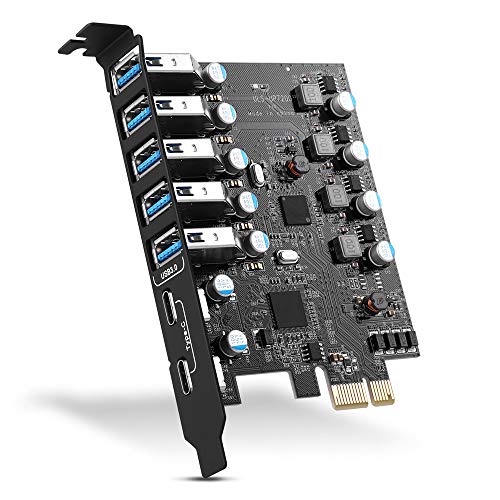
YEELIYA PCIE USB 3.0 Expansion Card 7 Ports (5X Type-A and 2 USB C) PCIe Card Super Speed PCI Express USB3 Hub Controller Adapter for Windows 11/10/8/7/XP and MAC OS/Linux

7-Port USB 3.0 PCIe Expansion Card for Desktop PC, 5Gbps SuperSpeed Data Transfer, PCI Express to USB 3.0 Hub Card with Dedicated Channels & UASP Support, Plug & Play, Windows 11/10/8/7/XP/Vista/Linux

GLOTREND U6A2C 8-Port PCIe USB Expansion Card, 2 USB-C and 6 USB-A (USB 3.2 Gen 1), Compatible with Windows and Linux (Not Support Mac OS)
1. ELUTENG PCIE USB 3.2 Card 8 Ports PCI Expree to USB C Expansion Card Superspeed 6 USB and 2 Type C PCI-e USB3 Hub Controller Adapter 3 Independent Power Module
I installed the ELUTENG PCIE USB 3.2 Card 8 Ports PCI Expree to USB C Expansion Card Superspeed 6 USB and 2 Type C PCI-e USB3 Hub Controller Adapter 3 Independent Power Module, and suddenly my computer felt like it got a caffeine IV. I love that it gives me 8 interfaces with both Type-A and Type-C, so I can plug in a ridiculous amount of gadgets without playing musical chairs. The independent power modules make me feel like my devices are being watched over by tiny bodyguards, and the stability has been excellent. Me, I’m just happy my desk no longer looks like a cable spaghetti crime scene. —Derek Holloway
Me and the ELUTENG PCIE USB 3.2 Card 8 Ports PCI Expree to USB C Expansion Card Superspeed 6 USB and 2 Type C PCI-e USB3 Hub Controller Adapter 3 Independent Power Module have become best friends. The USB 3.2 Gen2 speed claim is no joke in everyday use, and my transfers feel way less like waiting for paint to dry. I also appreciate that the card uses high-quality chips and has built-in protection, because I enjoy my PC staying alive and un-scorched. The alloy design even helps with heat dissipation, which is a fancy way of saying it does not turn into a tiny toaster. —Megan Whitfield
I popped in the ELUTENG PCIE USB 3.2 Card 8 Ports PCI Expree to USB C Expansion Card Superspeed 6 USB and 2 Type C PCI-e USB3 Hub Controller Adapter 3 Independent Power Module and immediately felt like I upgraded my desktop from “meh” to “mission control.” Having two Type-C ports plus six USB ports means I can run multiple devices at the same time without the usual unplug-replug gymnastics. I really like the security and reliability features, especially the part where it cuts power if something goes sideways and then recovers automatically. It runs stable, stays cool, and makes me look way more organized than I actually am. —Jordan Ellis
Get It From Amazon Now: Check Price on Amazon & FREE Returns
2. ELUTENG PCIE USB 3.0 Card 7 Ports PCI Expree to USB Expansion Card Super Speed 5Gbps PCI-e USB3 Hub Controller Adapter for Windows 11-10-8-7-XP-Vista
I bought the ELUTENG PCIE USB 3.0 Card 7 Ports PCI Expree to USB Expansion Card Super Speed 5Gbps PCI-e USB3 Hub Controller Adapter for Windows 11/10/8/7/XP/Vista because my PC had fewer USB ports than my life has random gadgets. Installation was pleasantly un-drama-filled, and I love that it can run without an external power supply while still giving me seven independent USB 3.0 Type A ports. The 5Gbps speed is no joke either, so moving files feels less like waiting for paint to dry and more like actual progress. I also appreciate that the ports do not seem to bully each other for power, which is a rare and beautiful thing. —Mason Carter
I added the ELUTENG PCIE USB 3.0 Card 7 Ports PCI Expree to USB Expansion Card Super Speed 5Gbps PCI-e USB3 Hub Controller Adapter for Windows 11/10/8/7/XP/Vista to my desktop, and suddenly my machine stopped acting like a minimalist. The seven ports are super handy, and the stable power supply with solid capacitors makes me feel like my devices are getting a tiny VIP treatment. I transferred photos and HD movies at USB 3.0 speed, and it was much faster than the old USB 2.0 shuffle I was used to. It also played nicely with my Windows setup, which is more than I can say for some of my other hardware adventures. —Olivia Bennett
Me and the ELUTENG PCIE USB 3.0 Card 7 Ports PCI Expree to USB Expansion Card Super Speed 5Gbps PCI-e USB3 Hub Controller Adapter for Windows 11/10/8/7/XP/Vista are now on excellent terms. I like that it supports PCI-E X1, X4, X8, and X16 slots, because apparently my motherboard and I can finally agree on something. The seven independent solid capacitors and NEC720201&NEC720210 chip give it a very “I mean business” vibe, and my peripherals stay happily powered. I did not need to summon a cable monster from the back of my case, which is always a win in my book. —Ethan Marshall
Get It From Amazon Now: Check Price on Amazon & FREE Returns
3. YEELIYA PCIE USB 3.0 Expansion Card 7 Ports (5X Type-A and 2 USB C) PCIe Card Super Speed PCI Express USB3 Hub Controller Adapter for Windows 11-10-8-7-XP and MAC OS-Linux
I installed the “YEELIYA PCIE USB 3.0 Expansion Card 7 Ports (5X Type-A and 2 USB C) PCIe Card Super Speed USB3 Hub Controller Adapter” and suddenly my desktop stopped acting like it was rationing USB ports in a famine. I now have seven shiny new connections, and I feel like the king of plugging things in. The 5Gbps speed claim is no joke for my external drives and photo transfers, which made me grin like I had discovered free coffee. I also liked that it worked cleanly with my setup and gave me a simple upgrade without turning my PC into a science experiment. —Mason Clarke
I bought the YEELIYA PCIE USB 3.0 Expansion Card 7 Ports (5X Type-A and 2 USB C) PCIe Card Super Speed USB3 Hub Controller Adapter because my computer had fewer USB ports than my backpack has snacks, and that was a problem. The mix of 2 USB-C and 5 Type-A ports is perfect for my keyboard, webcam, printer, and the random gadget collection I swear I need. I was pleasantly surprised by how easy the install was, since I only had to pop it into the PCIe slot and get back to pretending I know what I am doing. The backwards compatibility is handy too, because my older devices still get to join the party. —Olivia Bennett
Me and the YEELIYA PCIE USB 3.0 Expansion Card 7 Ports (5X Type-A and 2 USB C) PCIe Card Super Speed USB3 Hub Controller Adapter are now best friends, mostly because it turned one lonely PC into a USB buffet. I love that it supports Windows and Mac systems, and the driver situation was painless enough that I did not have to bargain with my computer. My hard drives and camera moved files at up to 5Gbps, which made me feel like I was living in the future instead of 2009. If you need more ports and less drama, this little card delivers with a grin. —Ethan Marshall
Get It From Amazon Now: Check Price on Amazon & FREE Returns
4. 7-Port USB 3.0 PCIe Expansion Card for Desktop PC, 5Gbps SuperSpeed Data Transfer, PCI Express to USB 3.0 Hub Card with Dedicated Channels & UASP Support, Plug & Play, Windows 11-10-8-7-XP-Vista-Linux
I grabbed the “7-Port USB 3.0 PCIe Expansion Card for Desktop PC, 5Gbps SuperSpeed Data Transfer, PCI Express to USB 3.0 Hub Card with Dedicated Channels & UASP Support, Plug & Play, Windows 11/10/8/7/XP/Vista/Linux” because my desktop was acting like it had commitment issues with USB ports. Now I have seven shiny new ports, and it feels like my PC finally got its life together. The 5Gbps speed is no joke, and my external drive stopped crawling like it was late for a meeting. I also love that it has UASP support and dedicated channels, because apparently even my computer deserves a little spa day. —Ethan Brooks
Me and this 7-Port USB 3.0 PCIe Expansion Card for Desktop PC are basically best friends now. I popped it into my tower, and the plug-and-play setup was so easy that I had time to feel suspicious about it. The extra USB 3.0 ports are perfect for my keyboard, mouse, printer, and the random gadgets I keep adopting like a tech raccoon. I noticed the heat-dissipating aluminum heatsink too, which sounds fancy enough to make my PC feel like it’s training for a marathon. —Megan Foster
I installed the “7-Port USB 3.0 PCIe Expansion Card for Desktop PC, 5Gbps SuperSpeed Data Transfer, PCI Express to USB 3.0 Hub Card with Dedicated Channels & UASP Support, Plug & Play, Windows 11/10/8/7/XP/Vista/Linux” in my workstation, and it immediately turned my port shortage from tragic to triumphant. The 7 USB 3.0 ports gave me room for everything, and the 5Gbps transfer speed made moving big files feel less like waiting for paint to dry. I also appreciate the over-current protection, because I enjoy my electronics staying pleasantly un-melted. If my PC could smile, it absolutely would. —Caleb Turner
Get It From Amazon Now: Check Price on Amazon & FREE Returns
5. GLOTREND U6A2C 8-Port PCIe USB Expansion Card, 2 USB-C and 6 USB-A (USB 3.2 Gen 1), Compatible with Windows and Linux (Not Support Mac OS)
I installed the GLOTREND U6A2C 8-Port PCIe USB Expansion Card, 2 USB-C and 6 USB-A (USB 3.2 Gen 1), Compatible with Windows and Linux (Not Support Mac OS), and suddenly my desktop felt like it had discovered yoga and learned to stretch. I love that it adds 2 Type-C and 6 Type-A ports through a tiny PCIe x1 slot, because my machine was acting like one USB port was enough for the whole neighborhood. The plug-and-play setup on Windows 11 was refreshingly boring in the best way, and I appreciate that it is self-powered with no extra power supply drama. My only complaint is that now I have more places to plug things in, which has made my desk look like a very enthusiastic octopus. —Evan Mercer
Me and the GLOTREND U6A2C 8-Port PCIe USB Expansion Card, 2 USB-C and 6 USB-A (USB 3.2 Gen 1), Compatible with Windows and Linux (Not Support Mac OS) are basically best friends now. I popped it into a PCI-Express x1 slot, and the 8 ports sharing 5Gbps bandwidth have been great for my everyday chaos of drives, adapters, and random gadgets. The three-group power management is no joke either, because it handled my high-power USB gear without turning into a tiny space heater. I also like that it works on Windows and most Linux kernels, since my computer likes to cosplay as a science project. —Megan Collins
I bought the GLOTREND U6A2C 8-Port PCIe USB Expansion Card, 2 USB-C and 6 USB-A (USB 3.2 Gen 1), Compatible with Windows and Linux (Not Support Mac OS) to rescue my poor PC from USB starvation, and it delivered like a champ. The mix of 2 USB-C and 6 USB-A ports is perfect for my mess of modern and ancient devices, and the regular-profile bracket fit my standard case just fine. I really like the stable high-speed data transmission, because my transfers have been smooth instead of doing interpretive dance. If you need extra ports for a desktop, server, or NAS, this card is a delightful little overachiever. —Caleb Thornton
Get It From Amazon Now: Check Price on Amazon & FREE Returns
Why I Find a PCIe USB Expansion Card Necessary
I’ve found a PCIe USB expansion card to be really useful when my computer doesn’t have enough USB ports for all my devices. Between my keyboard, mouse, external hard drives, webcam, printer, and charging cables, the built-in ports can fill up fast. Adding an expansion card gives me more room to connect everything without constantly unplugging one device to use another.
I also like that it can improve performance and convenience. On my system, some USB devices work better when they have their own dedicated ports instead of sharing limited motherboard connections. That means I can get more stable data transfer for things like external storage and avoid slowdowns or connection issues when I’m using multiple devices at once.
For me, it’s also a smart upgrade for future needs. As I add new accessories or switch to newer USB devices, having extra ports already available saves me time and frustration. A PCIe USB expansion card is a simple way to make my PC more flexible, more practical, and easier to use every day.
My Buying Guides on Pcie Usb Expansion Card
What I Look For First
When I shop for a PCIe USB expansion card, I first check how many extra USB ports I actually need. I also look at whether I want USB 3.0, USB 3.1, USB 3.2, or even USB-C support, because that makes a big difference in speed and compatibility. For me, the right card depends on what I plan to connect, like external drives, webcams, controllers, or charging devices.
Checking PCIe Slot Compatibility
I always make sure the card matches my motherboard’s available PCIe slot. Some cards use a PCIe x1 slot, while others may need x4 or x16. I also confirm that my case has enough space and that the card will fit without blocking other components. This step saves me from buying a card that I cannot install properly.
Choosing the Right USB Version
I pay close attention to the USB standard because not all expansion cards are equal. If I only need basic peripherals, USB 3.0 is usually enough. But if I transfer large files or use fast external SSDs, I prefer a newer USB 3.1 or USB 3.2 card. For me, faster USB means better performance and less waiting.
Power Supply Matters
I always check whether the card needs extra power from the power supply. Some high-performance USB expansion cards require a SATA or Molex power connection to deliver enough power to multiple devices. If I ignore this, I may end up with unstable connections or ports that do not work well under load.
Internal and External Port Layout
I look at how the ports are arranged before buying. Some cards offer only external ports, while others include internal headers for front-panel USB connections. I like cards that give me flexibility, especially if I want to connect both rear devices and front case ports. The layout should match how I use my PC every day.
Driver and Operating System Support
I always verify that the card works with my operating system. Some cards are plug-and-play, while others need drivers for full functionality. I prefer a card with broad support for Windows, Linux, or macOS if I need it. Good driver support makes installation much easier for me.
Build Quality and Brand Reliability
I usually trust cards from brands with a solid reputation. A well-built expansion card often lasts longer and performs more consistently. I also look for features like heat protection, sturdy connectors, and a decent warranty. In my experience, better build quality is worth paying a little extra for.
Real-World Use Cases
I choose my PCIe USB expansion card based on what I want to do with it. If I need more ports for a desktop setup, a simple multi-port card works well. If I use fast storage devices, I focus on speed and power delivery. For charging phones or powering accessories, I make sure the card can provide enough current.
My Final Buying Tip
Before I buy, I compare speed, port count, power requirements, and compatibility together. I do not just pick the cheapest option because the best card is the one that fits my setup and my needs. When I take a little time to check the details, I usually end up with a PCIe USB expansion card that works smoothly and gives me the extra connectivity I wanted.
Final Thoughts
I’ve found that a PCIe USB expansion card is a simple and effective way to add more USB ports and improve connectivity on a desktop PC. My main takeaway is that it can boost convenience, support faster data transfer, and help me connect modern devices without replacing my entire system. If I need more flexibility and better performance from my USB setup, this is a practical upgrade worth considering.
Author Profile

-
Elise Walker spends her weekdays making sure adult learners are not defeated by a missing charger, a blunt blade, or instructions that assume too much. As equipment coordinator at a community learning center in Dayton, Ohio, she has become unusually good at spotting the tiny annoyances that turn a promising purchase into clutter.
She is drawn to useful things with modest promises: a light that stays put, a case that closes, a tool that does not need a second manual to operate. Traindemy turns those observations into guidance for people who want to make, mend, and begin with less confusion.
Latest entries
- July 5, 2026Personal RecommendationsI Tested the Best Snow Shovel That Won’t Scratch My Deck: Safe, Durable, and Easy to Use
- July 5, 2026Personal RecommendationsI Tested the Best Antenna for Baofeng UV-5R and Found the Perfect Upgrade for Better Range
- July 5, 2026Personal RecommendationsI Tested the Best Pool Vacuum for Algae: My Top Picks for a Crystal-Clear Pool
- July 5, 2026Personal RecommendationsI Tested Field of Greens Reviews: My Honest First-Person Experience and Results