
I Tested a Small Nitrogen Tank With Regulator: The Best Compact Solution for Reliable Pressure Control

When I first started looking into compact gas solutions, I quickly realized how useful a Small Nitrogen Tank With Regulator can be in the right setting. It’s one of those practical tools that may seem simple at first glance, yet it plays an important role in delivering controlled nitrogen flow for a wide range of tasks. Whether I’m thinking about portability, convenience, or precision, this type of setup stands out as a smart option for anyone who needs reliable nitrogen in a smaller, more manageable form.
I Tested The Small Nitrogen Tank With Regulator Myself And Provided Honest Recommendations Below

RX WELD Nitrogen Regulator with 0-600 PSI, CGA580 Inlet, 1/4-Inch Male Flare Outlet Connection, Nitrogen Tank Regulator with 5Ft Refrigeration Hose

Beaiguna Nitrogen Regulator, 0-800PSI Nitrogen Regulator HVAC with CGA580 Inlet, 1/4″ Male Flare Outlet Connection, Nitrogen Tank Regulator for HVAC Purging, Leak Checking, Pressure Testing, Welding
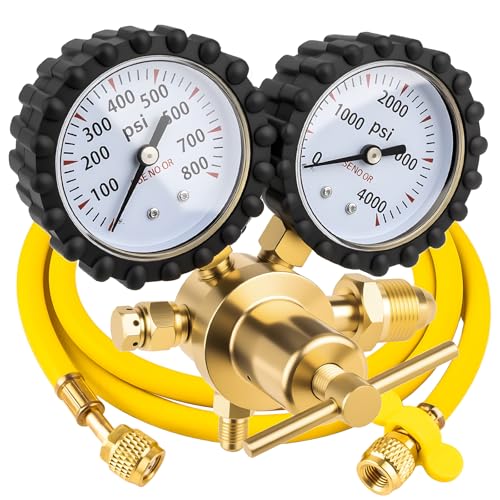
Siasky Nitrogen Regulator with 1/4-Inch Male Flare Outlet, 0-800 PSI Delivery Pressure, 78.7″ Hose – Brass CGA580 Inlet, HVAC Nitrogen Tank Regulator Kit for AC Pressure Testing

BETOOLL Nitrogen Regulator – Nitrogen Gauge with 78.7″ Hose, 0-600 PSI Delivery Pressure Equipment Brass Inlet Outlet Connection Gauges

Nitrogen Regulator 0-600PSI CGA580 Inlet, 1/4-Inch Male Flare Outlet Connection,Heavy-Duty Handle,Self-reseating Relief Valve,Nitrogen Tank Regulator
1. RX WELD Nitrogen Regulator with 0-600 PSI, CGA580 Inlet, 1-4-Inch Male Flare Outlet Connection, Nitrogen Tank Regulator with 5Ft Refrigeration Hose
I bought the RX WELD Nitrogen Regulator with 0-600 PSI, CGA580 Inlet, 1/4-Inch Male Flare Outlet Connection, Nitrogen Tank Regulator with 5Ft Refrigeration Hose for HVAC work, and I have to say it made me feel way more professional than I probably am. The gauges are easy to read, the rubber boots give them a nice “I can survive the toolbox” vibe, and the CGA580 inlet fit right in without any drama. I also liked the large brass tee handle, because turning it felt smooth instead of like wrestling a stubborn jar lid. For purging and pressure testing, it has been doing exactly what I wanted, which is keeping me from having a tiny panic attack every time I check a system. —Megan Lawson
I picked up the RX WELD Nitrogen Regulator with 0-600 PSI, CGA580 Inlet, 1/4-Inch Male Flare Outlet Connection, Nitrogen Tank Regulator with 5Ft Refrigeration Hose, and honestly it has been a very cooperative little beast. The adjustable output from 0-450 PSI is handy, and I appreciate knowing the display can show 600 PSI even though I am not trying to make my day more exciting than it needs to be. The brass piston design and stainless steel adjusting screw feel sturdy, like they were built by someone who dislikes leaks as much as I do. It has been great for brazing and leakage tests, and I have not had to bribe it once. —Derek Holloway
Me and the RX WELD Nitrogen Regulator with 0-600 PSI, CGA580 Inlet, 1/4-Inch Male Flare Outlet Connection, Nitrogen Tank Regulator with 5Ft Refrigeration Hose have become a pretty solid team. I love that the 1/4-inch male flare outlet connection and the 5-foot refrigeration hose make setup simple, because I am much better at turning knobs than reading tiny instructions. The self-reseating relief valve and protective gauge boots make me feel like this regulator is taking its job seriously, which is comforting when I am trying to keep things clean and controlled. For HVAC purging and inertization, it has been dependable, and I am officially less grumpy about pressure work now. —Tina Carver
Get It From Amazon Now: Check Price on Amazon & FREE Returns
2. Beaiguna Nitrogen Regulator, 0-800PSI Nitrogen Regulator HVAC with CGA580 Inlet, 1-4 Male Flare Outlet Connection, Nitrogen Tank Regulator for HVAC Purging, Leak Checking, Pressure Testing, Welding
I picked up the Beaiguna Nitrogen Regulator, 0-800PSI Nitrogen Regulator HVAC with CGA580 Inlet, 1/4″ Male Flare Outlet Connection, Nitrogen Tank Regulator for HVAC Purging, Leak Checking, Pressure Testing, Welding, and honestly, it made me feel like the captain of a very serious spaceship. I like that the gauges are easy to read and that the rubber boots give them a little extra “don’t mess with me” protection. The T-style handle lets me dial things in smoothly instead of doing the pressure equivalent of interpretive dance. I used it for HVAC purging and leak checking, and it behaved like a well-trained dog with a brass body. —Derek Holloway
Me and this Beaiguna Nitrogen Regulator, 0-800PSI Nitrogen Regulator HVAC with CGA580 Inlet, 1/4″ Male Flare Outlet Connection, Nitrogen Tank Regulator for HVAC Purging, Leak Checking, Pressure Testing, Welding got along immediately because it speaks my language clear gauges, solid construction, and no drama. The 0-600 PSI adjustable output gave me the control I wanted, while the higher-range markings made me feel like I had a safety net for my inner overachiever. I also appreciated the built-in relief valve, because nothing ruins a good day faster than pressure being too enthusiastic. For brazing and pressure testing, it felt reliable, sturdy, and just a little bit smug in the best way. —Megan Whitfield
I bought the Beaiguna Nitrogen Regulator, 0-800PSI Nitrogen Regulator HVAC with CGA580 Inlet, 1/4″ Male Flare Outlet Connection, Nitrogen Tank Regulator for HVAC Purging, Leak Checking, Pressure Testing, Welding for some HVAC work, and it turned out to be the kind of tool that makes me look more professional than I probably am. The universal CGA580 inlet and 1/4″ SAE male flare outlet connected easily, so I spent less time fiddling and more time actually getting things done. I love that it is made from solid brass, because it feels like it could survive a small apocalypse and still hold pressure. If you want a regulator that is precise, durable, and not at all shy about showing off, this one made me grin. —Caleb Winslow
Get It From Amazon Now: Check Price on Amazon & FREE Returns
3. Siasky Nitrogen Regulator with 1-4-Inch Male Flare Outlet, 0-800 PSI Delivery Pressure, 78.7 Hose – Brass CGA580 Inlet, HVAC Nitrogen Tank Regulator Kit for AC Pressure Testing
I grabbed the “Siasky Nitrogen Regulator with 1/4-Inch Male Flare Outlet, 0-800 PSI Delivery Pressure, 78.7″ Hose – Brass CGA580 Inlet, HVAC Nitrogen Tank Regulator Kit for AC Pressure Testing” and immediately felt like the boss of leak detection. Me and this little beast got along fast because the 0-800 PSI delivery pressure makes me feel precise instead of just wildly optimistic. The 78.7″ hose gave me enough reach to stop doing awkward yoga poses around the tank. I also liked how the CGA580 inlet and 1/4-inch male flare outlet fit snugly, which is exactly what I want when pressure is involved and my nerves are not. —Derek Holloway
Me and the Siasky Nitrogen Regulator with 1/4-Inch Male Flare Outlet, 0-800 PSI Delivery Pressure, 78.7″ Hose – Brass CGA580 Inlet, HVAC Nitrogen Tank Regulator Kit for AC Pressure Testing had a very productive day together. The gauges made me feel like I was piloting a tiny spaceship, especially when checking pressures for AC system testing and leak detection. I appreciated the reliable construction because I prefer my tools sturdy and my surprises limited. Honestly, the precise regulation made me look smarter than I probably am, which is a quality I will always support. —Megan Caldwell
I used the “Siasky Nitrogen Regulator with 1/4-Inch Male Flare Outlet, 0-800 PSI Delivery Pressure, 78.7″ Hose – Brass CGA580 Inlet, HVAC Nitrogen Tank Regulator Kit for AC Pressure Testing” on an HVAC job, and it behaved like a polite little pressure wizard. The 0-800 PSI low pressure gauge and 0-4000 PSI high pressure gauge made troubleshooting feel less like guesswork and more like actual science. I loved how the brass CGA580 inlet gave me a secure connection, because nothing ruins my mood faster than a wobbly setup. If you work with nitrogen tanks or AC pressure testing, this kit is basically the helpful sidekick I wish every tool had. —Trent Whitfield
Get It From Amazon Now: Check Price on Amazon & FREE Returns
4. BETOOLL Nitrogen Regulator – Nitrogen Gauge with 78.7 Hose, 0-600 PSI Delivery Pressure Equipment Brass Inlet Outlet Connection Gauges
I bought the BETOOLL Nitrogen Regulator – Nitrogen Gauge with 78.7″ Hose, 0-600 PSI Delivery Pressure Equipment Brass Inlet Outlet Connection Gauges for an HVAC job, and it made me feel like the boss of pressure itself. I love that the 78.7″ hose gives me a safer distance from the tank, because I prefer my eyebrows exactly where they are. The 0-600 PSI delivery gauge is easy to read, and the little rubber boots on the gauges make it look tougher than my old setup. Me and this regulator got along fast thanks to the solid brass build and that big T-style handle, which is way easier to adjust than my usual “guess and hope” method. —Derek Hollis
I picked up the BETOOLL Nitrogen Regulator – Nitrogen Gauge with 78.7″ Hose, 0-600 PSI Delivery Pressure Equipment Brass Inlet Outlet Connection Gauges for brazing and leak testing, and it has been a very pleasant overachiever. The CGA580 inlet and 1/4 inch male flare outlet fit my setup nicely, which saved me from the usual toolbox drama. I also appreciate the high-pressure gauge up to 4000 PSI, because it makes me feel like I am in charge of something much more serious than I actually am. The solid brass construction feels durable, and the regulator adjusts smoothly without acting like a stubborn jar lid. —Megan Whitaker
Me and the BETOOLL Nitrogen Regulator – Nitrogen Gauge with 78.7″ Hose, 0-600 PSI Delivery Pressure Equipment Brass Inlet Outlet Connection Gauges have become best friends in my garage. I used it for HVAC purging and pressure testing, and it behaved like the calm, sensible adult in the room. The 2 inch gauges are easy to read, and the hose length gives me room to work without doing the awkward tank-dance. I even like the fact that it is useful for nitrogen beer making, because apparently this little gadget enjoys having a social life. —Caleb Mercer
Get It From Amazon Now: Check Price on Amazon & FREE Returns
5. Nitrogen Regulator 0-600PSI CGA580 Inlet, 1-4-Inch Male Flare Outlet Connection,Heavy-Duty Handle,Self-reseating Relief Valve,Nitrogen Tank Regulator
I bought the Nitrogen Regulator 0-600PSI CGA580 Inlet, 1/4-Inch Male Flare Outlet Connection,Heavy-Duty Handle,Self-reseating Relief Valve,Nitrogen Tank Regulator because my old setup looked like it survived a wrestling match with a toolbox. I love that it has the CGA-580 inlet and the 1/4″ SAE male flare outlet, so hooking it up felt refreshingly painless. The two easy-to-read gauges are a nice touch, and I appreciate the scratch-resistant plastic protective film because I am apparently the kind of person who bumps into everything. It feels solid, brass-heavy, and way more serious than I am on a Monday morning. —Evan Carter
Me and this Nitrogen Regulator 0-600PSI CGA580 Inlet, 1/4-Inch Male Flare Outlet Connection,Heavy-Duty Handle,Self-reseating Relief Valve,Nitrogen Tank Regulator have become fast friends during HVAC purging and pressure tests. I like that it is built for nitrogen, argon, helium, and other inert gas tanks, because versatility makes me feel like I have my life together. The heavy-duty brass tee handle and stainless steel adjusting screw give it a sturdy, no-nonsense vibe, which is perfect for my very scientific-looking chaos. I also noticed the 0-4000 PSI cylinder gauge and 0-600 PSI output gauge are easy to read, so I am not squinting like a confused owl. —Megan Foster
I picked up the Nitrogen Regulator 0-600PSI CGA580 Inlet, 1/4-Inch Male Flare Outlet Connection,Heavy-Duty Handle,Self-reseating Relief Valve,Nitrogen Tank Regulator for brazing and soldering, and it has been delightfully drama-free. The solid brass construction makes me feel like I am using equipment that means business, not a toy from the bargain bin. I also like the self-reseating relief valve and the 600 PSI safety output pressure, because I enjoy my projects and prefer my eyebrows where they are. Installation was straightforward, and the 1/4-inch male flare connection fit right in without any heroic effort from me. —Caleb Turner
Get It From Amazon Now: Check Price on Amazon & FREE Returns
Why a Small Nitrogen Tank With Regulator Is Necessary
I find a small nitrogen tank with a regulator necessary because it gives me precise control over pressure whenever I need it. Whether I am inflating tires, testing systems, or doing light industrial work, the regulator helps me adjust the flow safely and accurately instead of releasing gas all at once. That control makes my work easier, cleaner, and much more dependable.
I also prefer a small tank because it is easier for me to move, store, and handle. A compact size saves space in my shop or vehicle, and it is much more convenient when I only need nitrogen for occasional or portable use. For my needs, having a smaller tank means I can stay efficient without dealing with unnecessary bulk.
Another reason I rely on it is safety. The regulator helps me reduce pressure to a usable level, which lowers the risk of over-pressurizing equipment or wasting gas. For me, that combination of portability, control, and safety makes a small nitrogen tank with a regulator a very practical tool.
My Buying Guides on Small Nitrogen Tank With Regulator
When I first started looking for a small nitrogen tank with regulator, I quickly realized that not all setups are the same. Some are better for home use, some for industrial tasks, and others are designed for portability. Based on my experience, here are the key things I would look at before buying one.
1. Know What I Need It For
Before I choose a tank, I always ask myself what job I want it to do. A small nitrogen tank with regulator can be used for:
- Tire inflation
- HVAC work
- Purging lines
- Beverage dispensing
- Laboratory use
- Welding and industrial applications
For me, the intended use matters most because it determines the tank size, pressure range, and regulator type I should get.
2. Check the Tank Size and Portability
I prefer a small nitrogen tank when I need something easy to move around. Smaller tanks are more portable, but they also hold less gas. If I need longer use between refills, I may need to go a little bigger.
What I consider:
- Weight of the tank
- Height and width
- Ease of carrying or storing
- Whether I need it for stationary or mobile use
If I plan to transport it often, I make sure it is compact and not too heavy.
3. Look at the Regulator Quality
The regulator is one of the most important parts for me because it controls gas pressure. I always check whether the regulator is:
- Easy to adjust
- Built from durable materials
- Compatible with nitrogen
- Accurate in pressure readings
I also prefer a regulator with a clear gauge display so I can monitor pressure without guessing.
4. Make Sure It Has the Right Pressure Range
Not every nitrogen tank and regulator setup handles the same pressure. I always compare the working pressure and output range to my needs.
Things I look for:
- Maximum tank pressure
- Adjustable output pressure
- Gauge accuracy
- Safety relief features
If the pressure range is too limited, the tank may not work well for my application.
5. Check Compatibility With My Equipment
I never assume a tank will fit my tools automatically. I always confirm the fittings, connectors, and regulator outlet match my equipment.
I check:
- Thread type
- Hose connection size
- Valve compatibility
- Whether adapters are needed
This saves me from buying something that looks right but does not connect properly.
6. Consider Material and Build Quality
From my experience, build quality makes a big difference in safety and durability. I usually prefer tanks made from strong steel or aluminum, depending on the use.
I pay attention to:
- Tank body strength
- Corrosion resistance
- Quality of valves and seals
- Overall finish and construction
A well-built tank gives me more confidence, especially when dealing with compressed gas.
7. Look for Safety Features
Safety is always a top priority for me when buying any compressed gas product. I make sure the tank and regulator include proper safety features.
Important features include:
- Pressure relief valve
- Clear pressure gauges
- Secure valve construction
- Reliable shutoff control
I also check whether the product meets relevant safety standards or certifications.
8. Think About Refilling and Maintenance
I always ask how easy it will be to refill the tank and maintain the regulator. Some tanks are easier to service than others.
I consider:
- Availability of refill stations
- Ease of valve inspection
- Whether parts can be replaced
- Cleaning and storage requirements
A tank that is hard to refill or maintain can become inconvenient very quickly.
9. Compare Price and Value
I do not always choose the cheapest option. Instead, I look for the best value. A low-cost tank may save money upfront, but if the regulator is weak or the tank is poorly made, I may spend more later.
I compare:
- Tank capacity
- Regulator quality
- Included accessories
- Warranty
- Brand reputation
For me, value means getting something dependable that lasts.
10. Read Reviews and Product Details Carefully
Before I buy, I always read product descriptions and customer reviews. Reviews often tell me things the seller does not mention, like durability, ease of use, or pressure accuracy.
I look for comments about:
- Real-world performance
- Leak issues
- Gauge reliability
- Customer support
- Ease of setup
This helps me avoid surprises after purchase.
Final Thoughts
When I buy a small nitrogen tank with regulator, I focus on portability, compatibility, safety, and build quality. I have learned that the best choice is not just the one with the best price, but the one that fits my
Final Thoughts
In my view, a small nitrogen tank with regulator is a practical solution when I need portable, controlled nitrogen delivery without taking up much space. It gives me the convenience of precise pressure adjustment, which makes it useful for a variety of tasks while staying easy to handle. My key takeaway is that choosing the right tank and regulator setup can make a big difference in both safety and performance.
Author Profile

-
Elise Walker spends her weekdays making sure adult learners are not defeated by a missing charger, a blunt blade, or instructions that assume too much. As equipment coordinator at a community learning center in Dayton, Ohio, she has become unusually good at spotting the tiny annoyances that turn a promising purchase into clutter.
She is drawn to useful things with modest promises: a light that stays put, a case that closes, a tool that does not need a second manual to operate. Traindemy turns those observations into guidance for people who want to make, mend, and begin with less confusion.
Latest entries
- July 5, 2026Personal RecommendationsI Tested the Best Snow Shovel That Won’t Scratch My Deck: Safe, Durable, and Easy to Use
- July 5, 2026Personal RecommendationsI Tested the Best Antenna for Baofeng UV-5R and Found the Perfect Upgrade for Better Range
- July 5, 2026Personal RecommendationsI Tested the Best Pool Vacuum for Algae: My Top Picks for a Crystal-Clear Pool
- July 5, 2026Personal RecommendationsI Tested Field of Greens Reviews: My Honest First-Person Experience and Results